

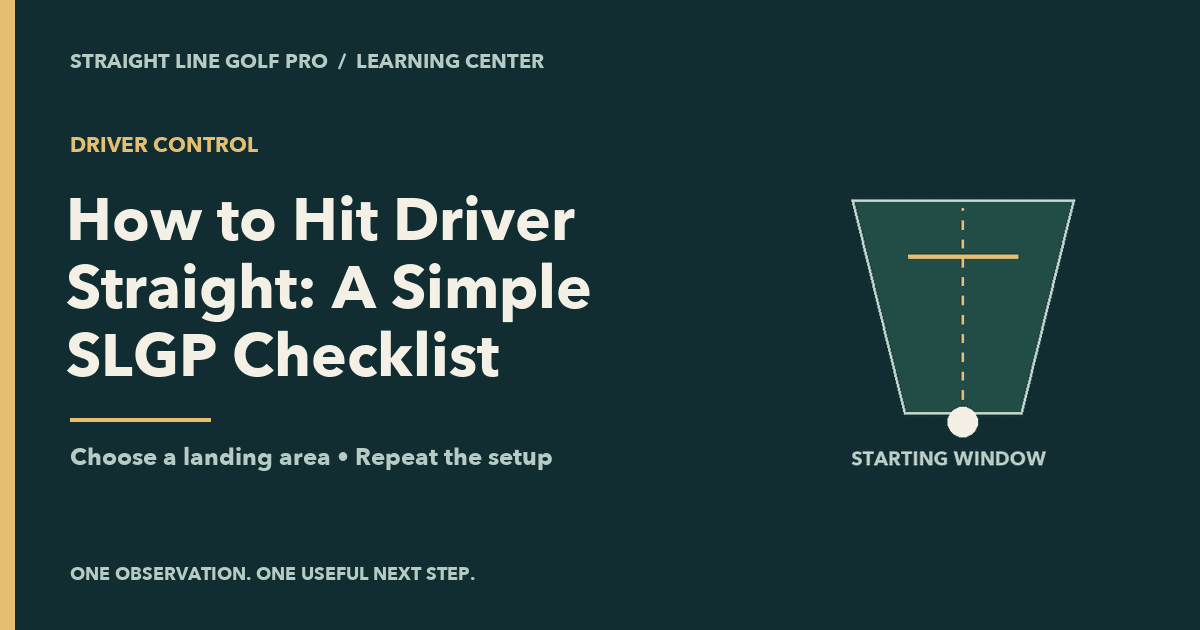
To work toward straighter drives, repeat your setup and observe both the start line and contact. Choose a safe target that allows your normal curve rather than demanding a perfectly straight shot.
Build a consistent starting point
Aim the clubface before setting your feet. PGA coach Keith Stewart describes this target-first approach in his clubface lesson. PGA: Understanding the Clubface.
Use a consistent tee height and a comfortable forward ball position for a teed driver. The PGA Sports Academy manual uses the lead heel as an introductory driver reference. It is a starting point, not proof that every golfer needs the same position or launch conditions.
The driver accuracy checklist
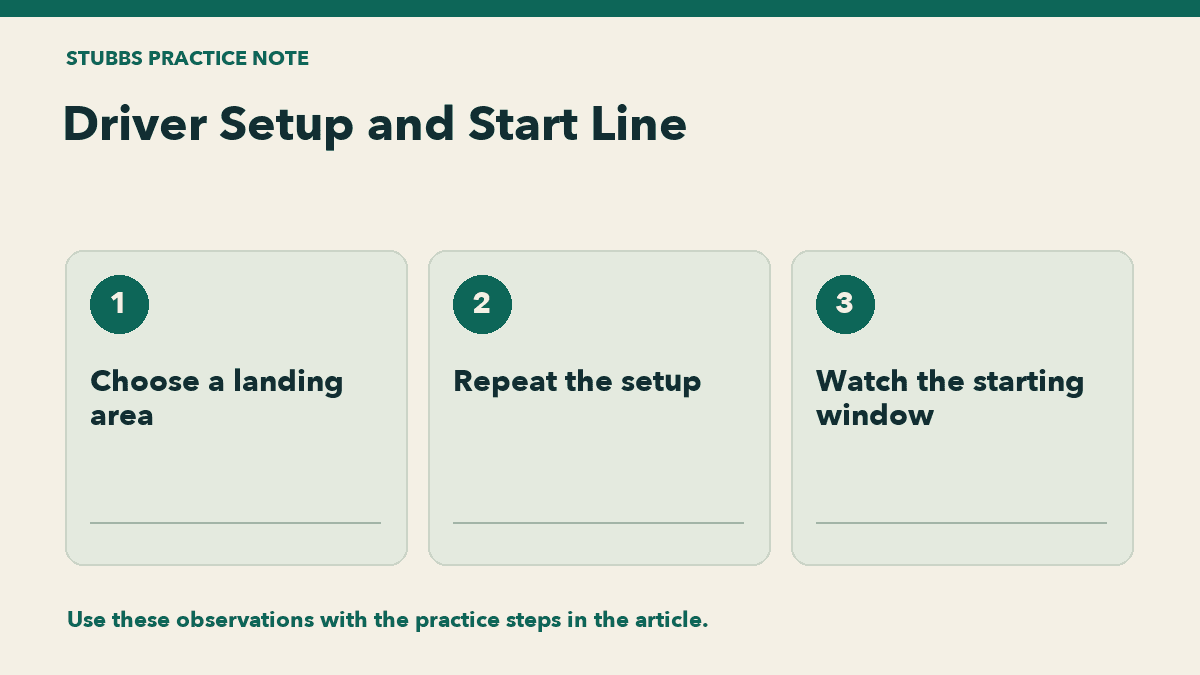
- Pick a landing area with room for your usual miss.
- Choose a nearby spot on the intended starting line and aim the face at it.
- Set your stance comfortably without twisting the face to match your feet.
- Repeat your chosen tee height and ball-position reference.
- Make a balanced swing at a manageable effort. Watch the starting window and where the shot finishes.
Measure a pattern, not a perfect shot
At the range, hit five shots with the same setup and count how many start inside a chosen window. Record the finish and strike separately. The window and set size are SLGP practice choices, not performance standards.
If starts vary, return to aim and contact checks. If starts repeat but curvature is large, use the slice worksheet or duck-hook check. If accuracy is usable and distance is the next question, try the driver strike-pattern session. A consistent setup makes the comparison clearer; it does not guarantee fairways.