

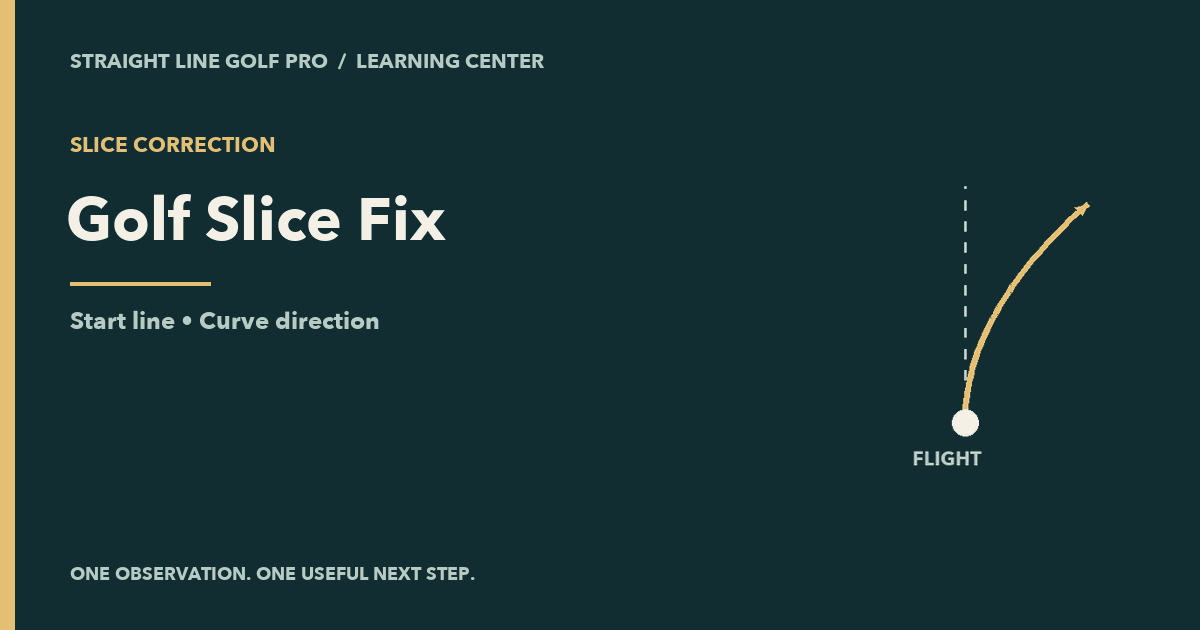
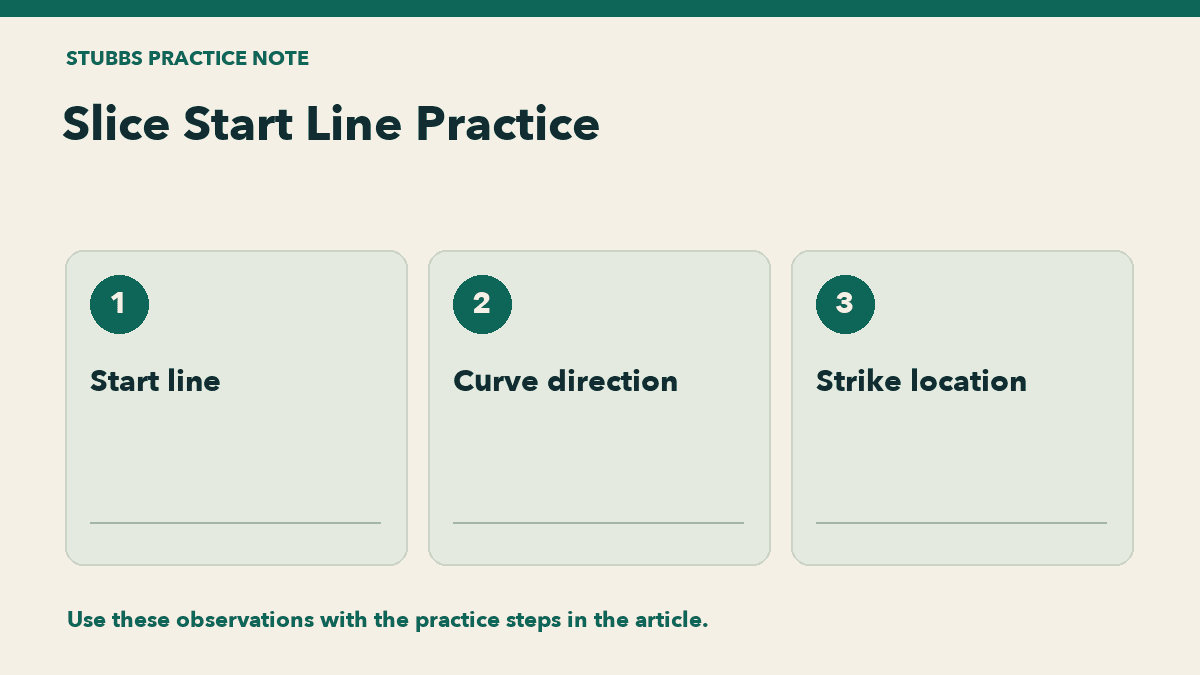
Use a short range session to separate three observations: where the ball starts, which way it curves and where it strikes the face. Aiming farther away from the miss does not tell you which of those needs attention.
Know what the flight can tell you
For centered contact, the relationship between face angle and club path helps explain curvature. A slice curves toward the trail-hand side: right for a right-handed golfer and left for a left-handed golfer. Off-center driver contact can complicate the picture. Trackman: Face-to-Path.
The slice overview introduces the main concepts. This page is a practice worksheet for collecting evidence before you choose a swing change.
Run the six-shot observation set
- Choose one club and a safe, wide target. Identify a nearby spot on the intended starting line.
- Aim the clubface at that spot, then settle into your stance without twisting the face again.
- Hit three comfortable shots. Write down start left/center/right, curve direction and strike location if visible.
- Repeat three shots with the same setup. Avoid changing grip, path and speed between balls.
- Compare the two groups. Bring the repeated pattern, rather than the worst single shot, to your next coaching conversation.
Choose the next question
If the start line varies widely, check alignment and face control. If it repeats but the curve is large, discuss face-to-path and contact with a coach. Do not assume a specific wrist motion from the ball flight alone.
The six-shot format is an SLGP practice suggestion; it does not prove a permanent fix. Use alignment practice for setup checks or ask Stubbs which observation deserves attention first.