

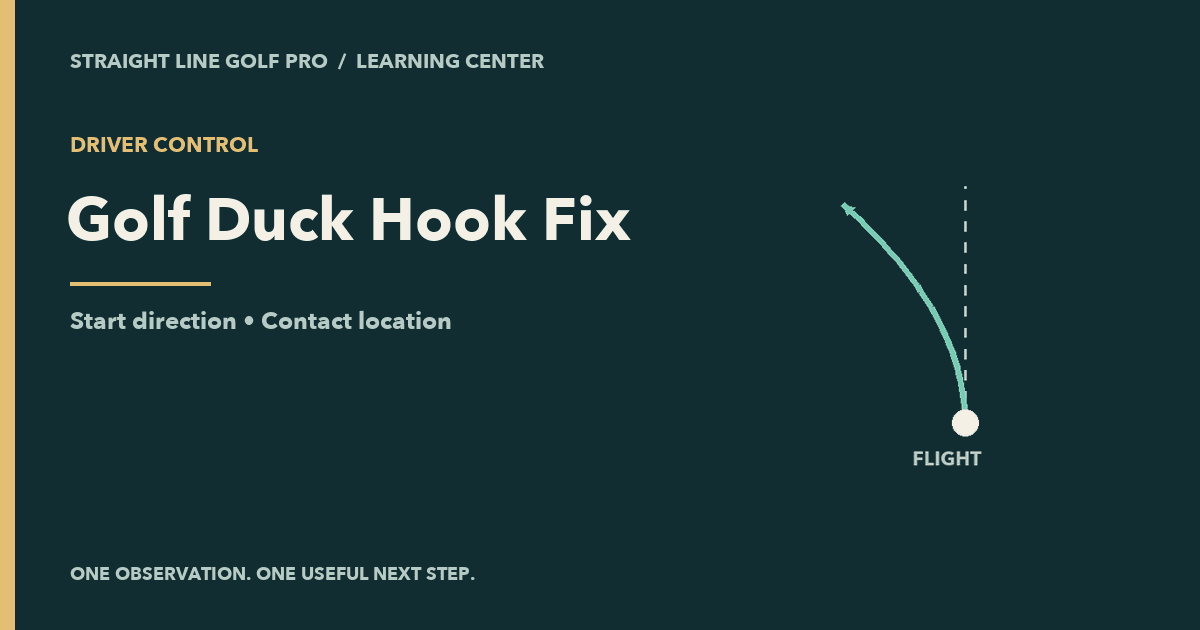
A duck hook is a low shot with a sharp curve toward the lead-hand side. Start by recording contact and flight at a manageable speed; do not immediately force the clubface open or make a large grip change.
Separate curve from contact
With centered contact, a face closed relative to the path produces draw or hook curvature. For a right-handed player that curve is left; reverse it for a left-handed player. Driver toe contact may also influence curvature. Trackman: Ball Flight and Contact.
A hook does not by itself prove that your hands are too active. Check alignment, strike and the repeated flight before choosing a mechanical explanation.
Try a controlled five-shot check
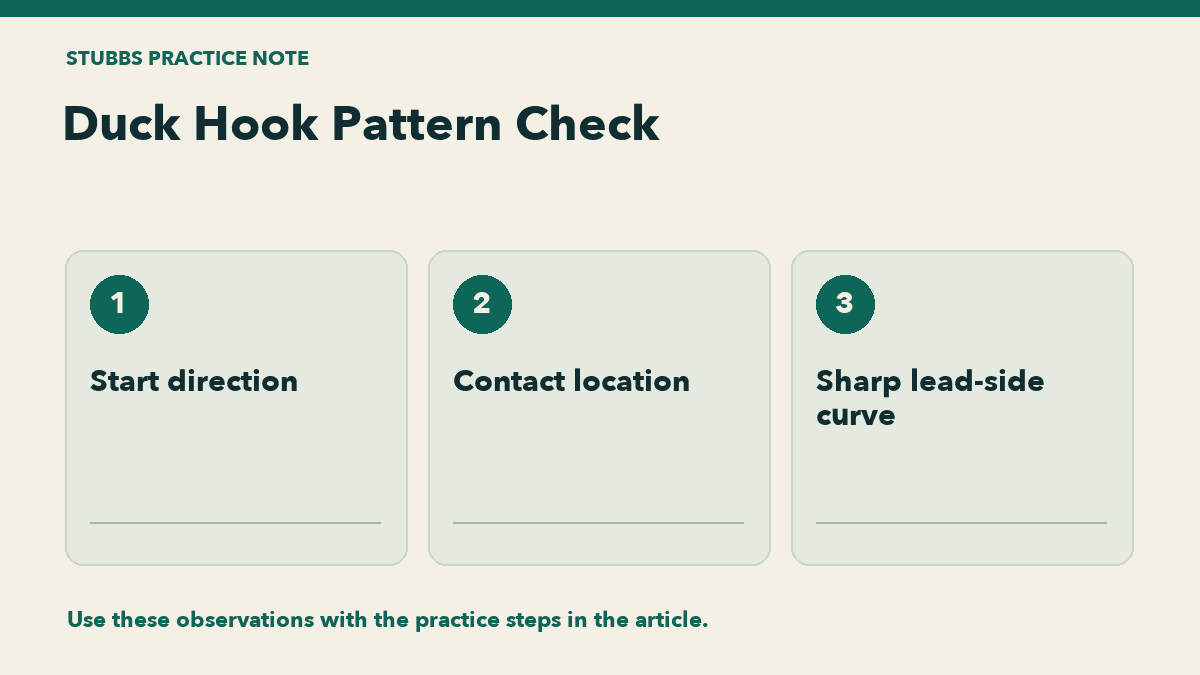
- Select a safe target with room on both sides and use your normal driver setup.
- Make two relaxed rehearsals without trying to roll or hold off the hands.
- Hit five shots at an effort you can finish in balance.
- Record start direction, height and curve. Check the face for a consistent toe or heel pattern when practice impact tape is available.
- Keep the same target and tee height for a second group if the first group is safe to continue.
Respond to the evidence
If reduced effort improves contact, keep that effort while you check the setup. If centered shots still dive sharply to the lead side, a coach can assess face and path together. Avoid chasing a perfect straight flight by making an opposite extreme move.
This is an SLGP observation routine, not an automatic hook cure. Read driver accuracy basics or describe the repeated pattern to Stubbs.