

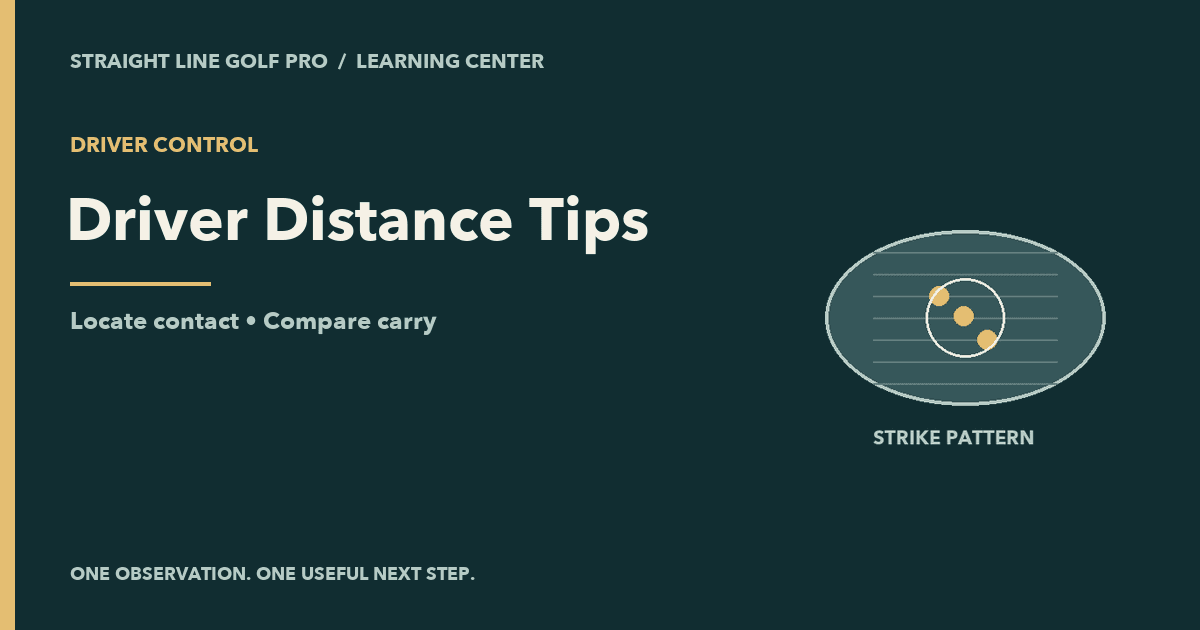
Start by checking where the ball meets the driver face. Compare several drives at a comfortable effort before trying to swing faster. A longer best shot is less useful than a repeatable carry distance with a playable miss.
Why contact comes before a speed chase
Trackman defines smash factor as ball speed divided by club speed. It describes impact efficiency; it is not a stand-alone diagnosis of your swing. More club speed does not automatically produce the same increase in ball speed. Trackman: Smash Factor.
Keep carry and total distance separate. Total includes roll, which changes with the landing surface and conditions. Compare shots using the same club, ball type and target, and record the conditions rather than treating every yard as a swing improvement.
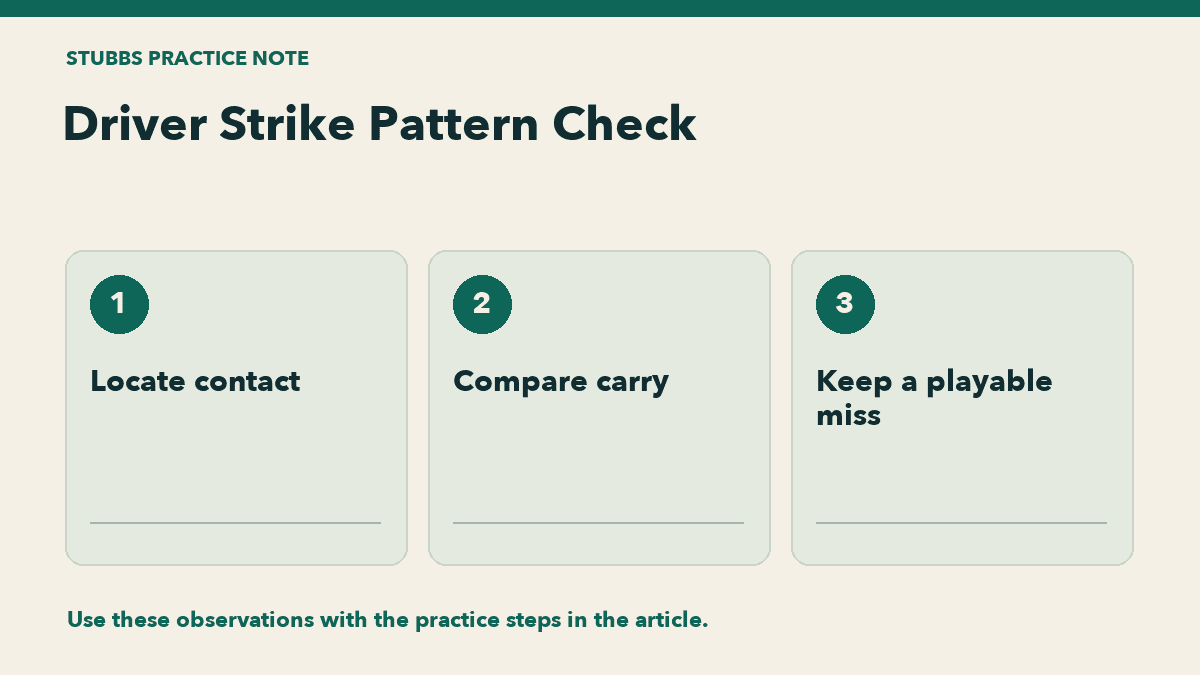
A nine-ball driver check
- Warm up, then choose a wide, safe range target. Use the same tee height for the whole set.
- Hit three drives at your normal comfortable effort. Record strike location using face tape intended for practice, if available.
- Hit three more with the single intention of repeating the most centered contact. Do not force a longer backswing.
- Finish with three normal drives. Record carry if measured, the miss direction and contact quality.
- Compare the groups, including mishits. Keep the version that produces the more useful overall pattern.
What to change next: Driver Distance Tips
If the strike moves all over the face, stay with contact work and the driver setup checklist. If contact is stable but flight remains unusually low or high, a coach or fitter can assess launch, spin and equipment together. A phone video alone cannot supply reliable launch-monitor measurements.
This range check is an SLGP practice suggestion, not a validated distance test or a promise of extra yards. Stop adding effort when balance or strike quality deteriorates. For a broader training discussion, read how to hit driver farther.