

A thin iron shot needs a contact check, not an automatic “keep your head down” command. Observe the face strike and turf contact together before deciding what to change.
Myth: every low shot is the same miss
A deliberately flighted iron, a thin strike and a topped ball can all fly low. The contact and intended shot matter. Record what you were trying to hit, what the club struck and whether the ground was contacted before or after the ball.
PGA instruction identifies attempts to lift the ball with the hands as one possible contributor to poor iron contact. It does not make that the explanation for every golfer. PGA: Iron Contact.
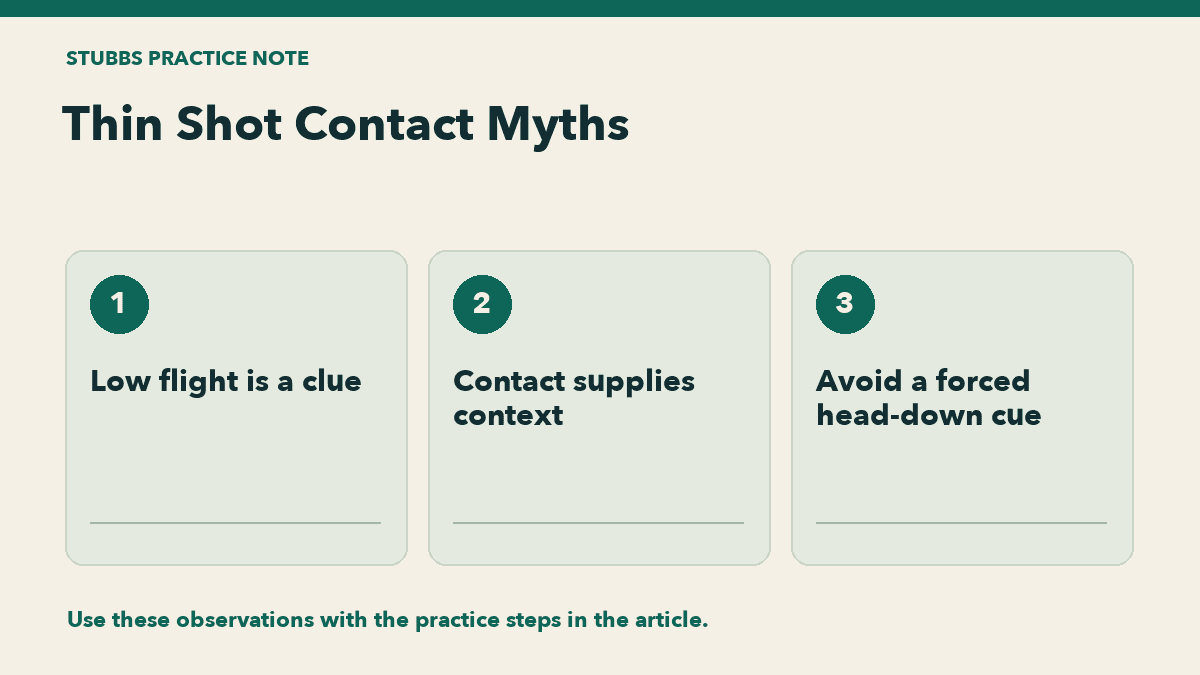
Myth: holding the head still solves every top
Freezing your head can turn practice into a tense positional exercise. PGA coach Brian Schippel offers a different focus from the familiar head-down instruction in his topping lesson. PGA: Stop Topping the Golf Ball.
Use a relaxed, small swing that allows a comfortable finish. If a cue makes you rigid or uncomfortable, stop using it.
Fact: a short set gives you something to compare
Choose a short iron and hit five small shots from a level practice lie. Record solid, thin, topped or heavy after each ball. On grass, note the first turf contact too. Repeat at the same effort before drawing a conclusion. This is an SLGP observation set, not a diagnostic test.
If the ground is struck first, use the fat-shot check. If the ball is repeatedly topped, use the topping contact exercise. Ask Stubbs about the repeated pattern rather than combining all three drills at once.