

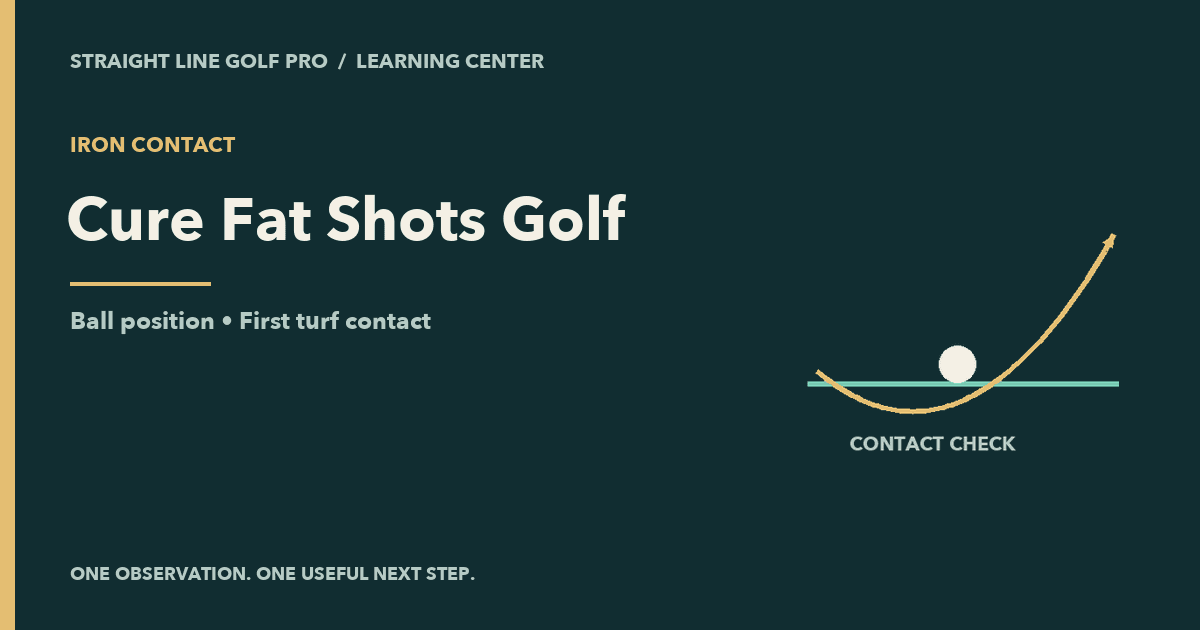
For fat iron shots, check whether the club meets the ground before the ball. Start with short swings on a level practice lie and observe the first turf mark; do not simply try to hit down harder.
What the ground can show
Low point describes the bottom of the clubhead arc. The location of that bottom relative to the ball matters when evaluating iron contact. Trackman: Low Point.
The first turf mark is a useful observation, but it is not a complete low-point measurement. A mat may also allow the club to bounce into the ball after a heavy strike, hiding the problem in the resulting flight.
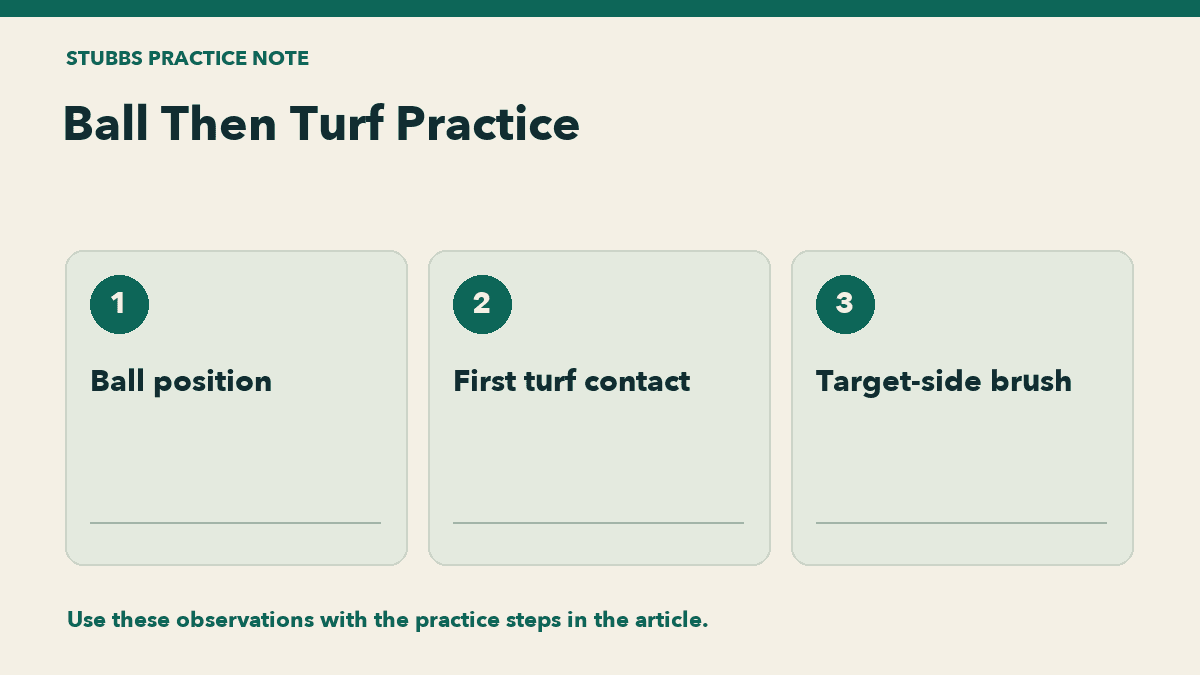
A short ball-then-turf check
- At a range that permits turf practice, choose a short iron and a level lie.
- Imagine a line across the ball position, perpendicular to the target.
- Make a few small rehearsals and notice where the sole first brushes the ground.
- Hit five gentle shots and record whether turf contact begins behind the ball or on its target side. Do not try to make a deep divot.
- Compare another small set at the same effort. Keep the target, club and lie consistent.
Interpret without overcorrecting
If contact starts behind the ball repeatedly, a coach can assess setup, pressure movement and release. A single mark does not identify which one caused it. If there is little turf contact and the strike is low on the face, compare the thin-shot guide instead.
The set size is an SLGP practice suggestion, not a pass/fail standard. Describe the strike and surface to Stubbs before adopting a second swing thought.