

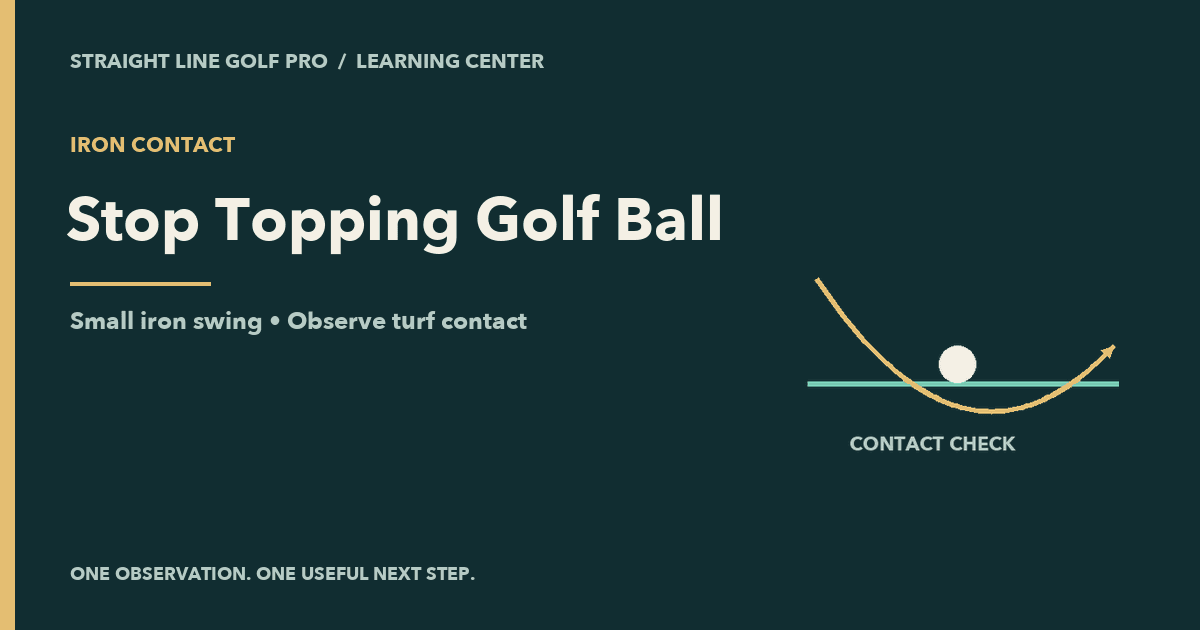
For topped iron shots, begin with small swings and check strike location. Let the loft lift the ball. Do not respond by freezing your head or forcing the club sharply into the ground.
Check the strike before naming the cause
A topped shot occurs when the club meets the ball too high. A thin shot is also a contact error, but the flight alone does not identify its cause. Kevin Cotter, PGA: Topped Contact. A low runner alone does not establish whether your setup, balance or delivery caused it.
PGA coach Brendon Elliott identifies hanging back and trying to scoop the ball with the hands as possible contributors to topped iron shots. These are possibilities to investigate, not a diagnosis of every golfer. PGA: Two Tips for Iron Contact.
A short iron-contact session
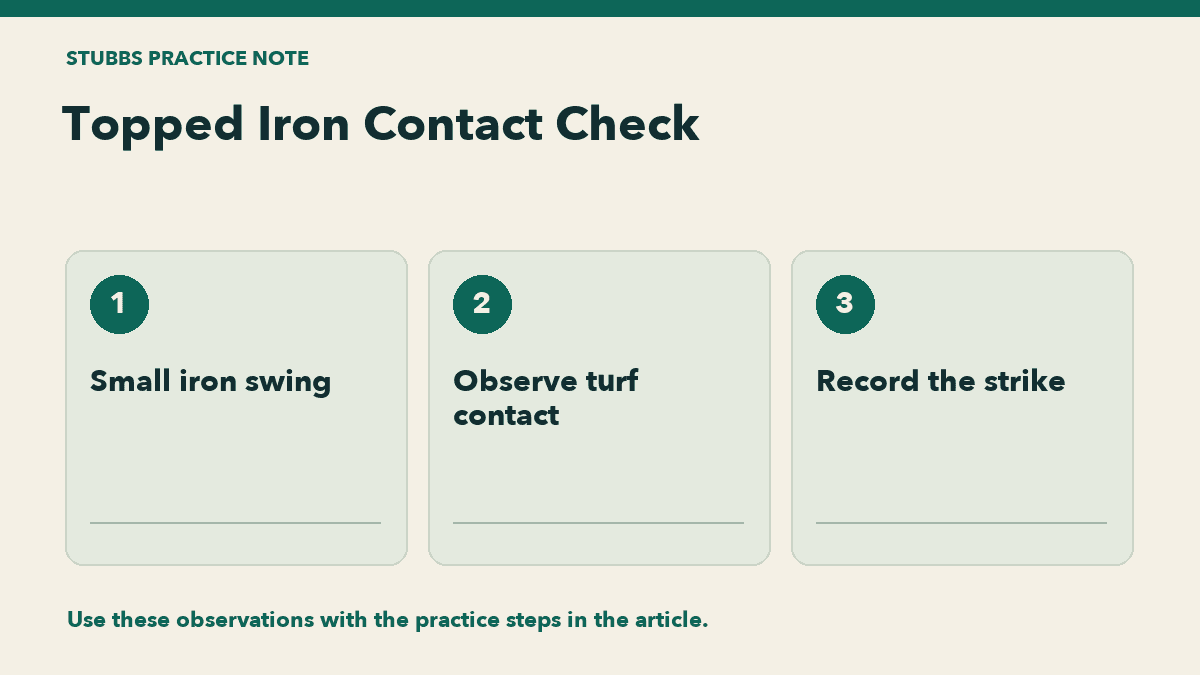
- Choose a short iron, a level practice lie and a safe target. Make a few easy rehearsals without a ball.
- Notice where the club brushes the turf. Avoid digging a deep trench.
- Add a ball and make five small swings, allowing the club to continue through to a comfortable finish.
- Record each result as solid, thin, topped or heavy. On grass, also note where the first turf contact occurs relative to the ball.
- Repeat at the same effort. Lengthen the swing only when the smaller motion gives useful contact.
Keep the test specific to irons
This is an SLGP observation exercise, not a requirement to take a divot with every club. A teed driver needs a different setup; do not transfer an iron turf-contact cue to it. Mats can also hide heavy contact, so use strike and ball flight as additional clues.
If the problem persists, record a steady face-on or down-the-line clip and describe the club and lie to Stubbs. Compare thin shots with fat shots before choosing another drill.