

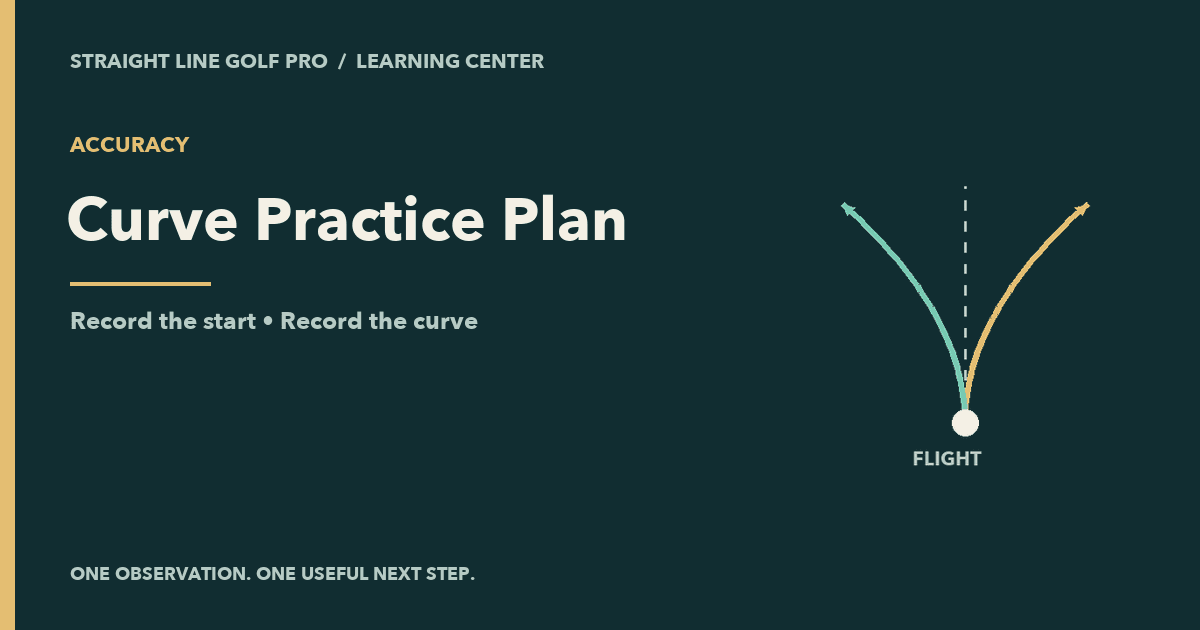
Begin curve practice by identifying your normal shot shape. Record start direction and curve separately, using one club and a wide target before experimenting with a different flight.
Use a simple flight vocabulary
For centered contact, face-to-path helps explain which way a shot curves. The ball tends to curve toward the face relative to the path. Off-center contact, especially with a driver, adds another influence. Trackman: Face-to-Path.
Describe direction from the golfer’s view down the target line. “Started left and curved right” is clearer than “bad slice.” Handedness matters when calling a shape a fade or draw.
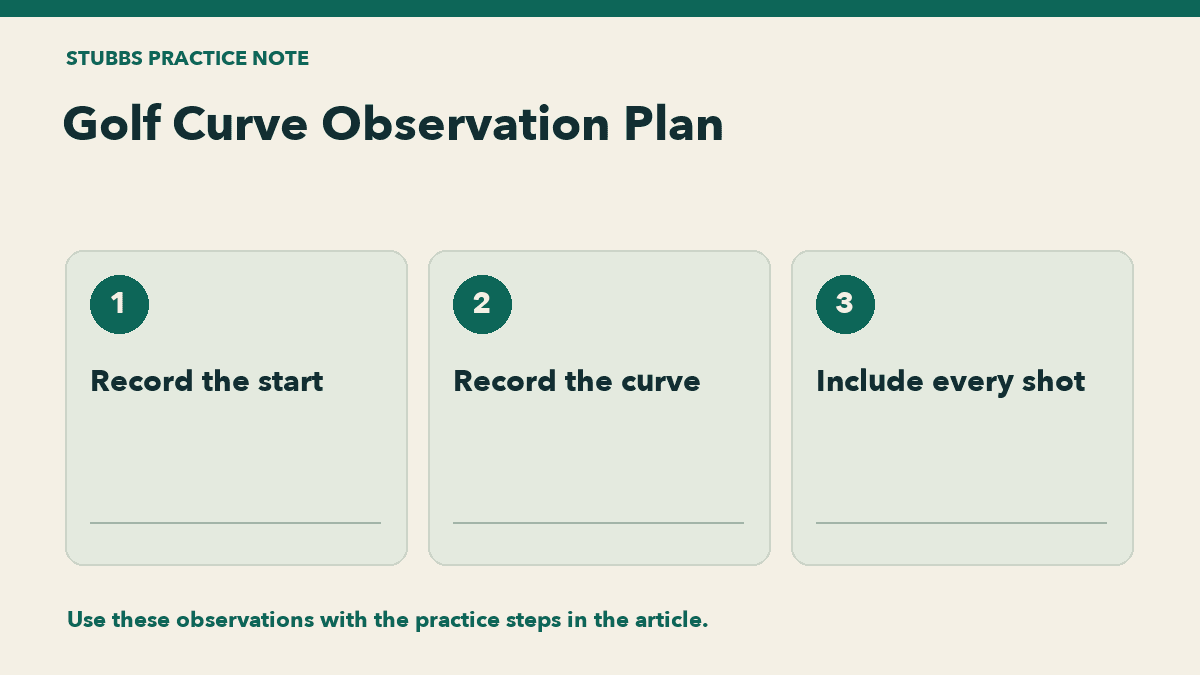
A twelve-ball observation session
- Choose a mid-iron, a level lie and a target with a wide safe landing area.
- Hit four comfortable shots with your usual setup. Record start, curve and contact.
- Rebuild alignment for a second four-ball group without adding a new swing feel.
- Hit the final four with the same intention. Mark any uncertain observation instead of guessing.
- Count the common patterns. Keep straight shots and mishits in the record rather than selecting only the best curves.
Turn the pattern into a decision
If the same small curve repeats, consider aiming for a landing area that allows it. If shots curve strongly both ways, contact and face control deserve attention before deliberate shot shaping. A phone clip may show useful movement clues but cannot reliably measure exact face-to-path degrees.
This is an SLGP practice plan, not a test of playing handicap. Use slice practice or the duck-hook check for a repeated one-sided miss, and ask Stubbs which observation to work on next.