

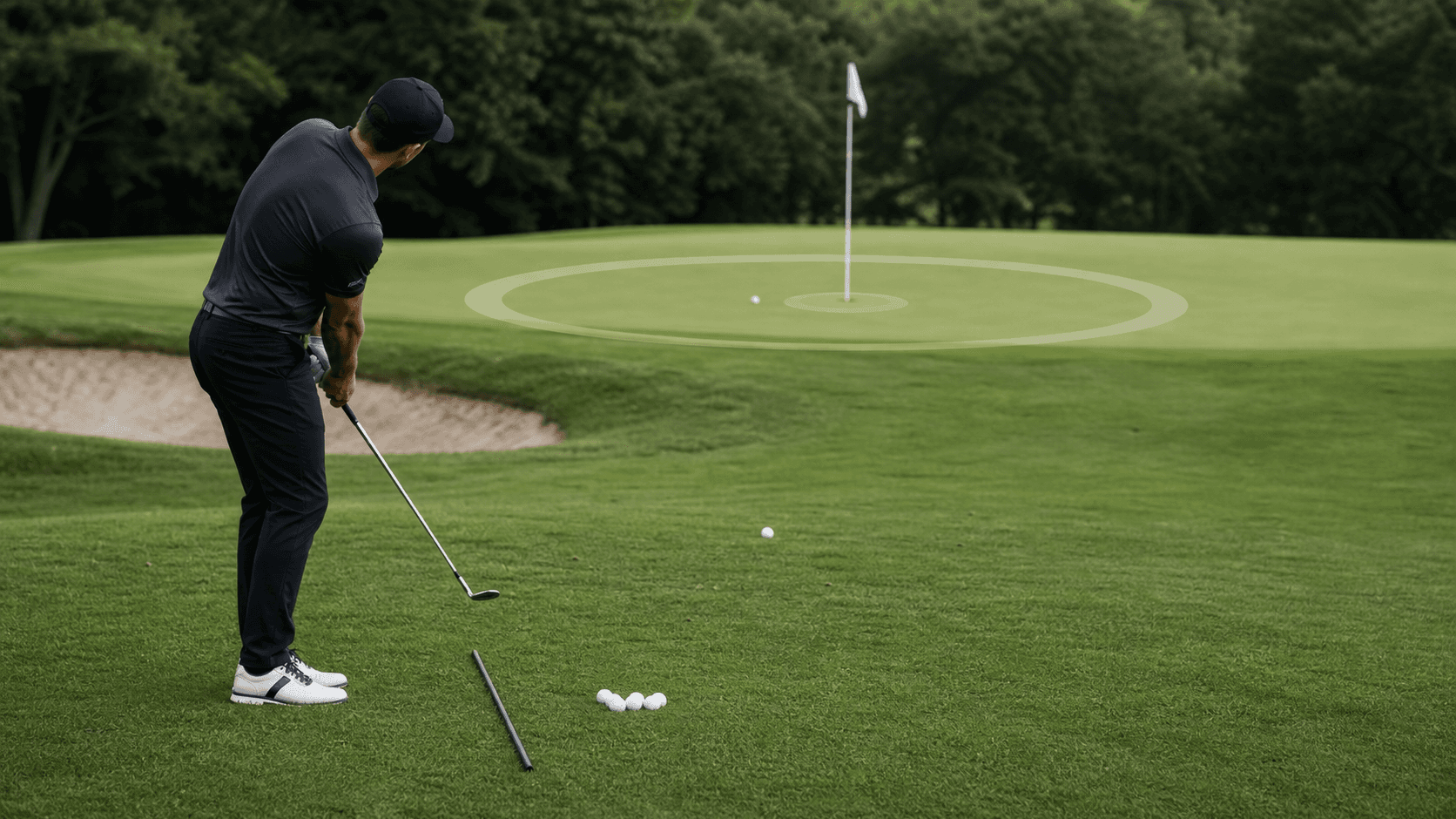
For many weekend golfers, the difference between a good round and a frustrating one often comes down to the short game, and specifically, putting. It's not always about sinking every putt, but rather about avoiding the dreaded three-putt. The key to this is consistent putting distance control. When you can reliably get your first putt close to the hole, you reduce stress, save strokes, and make the game more enjoyable.
This article introduces a practical, game-based approach to mastering your putting distance control, designed specifically for the realities of the weekend golfer. We'll focus on simple, repeatable methods that build feel and consistency, turning practice into a productive challenge.
Quick Answer
To improve putting distance control, weekend golfers should regularly engage in a structured practice "game" that emphasizes varying stroke lengths and consistent rhythm. The core approach involves setting up multiple targets at different distances and focusing on getting the ball within a specific "scoring zone" around each hole. This builds muscle memory and feel for pace, directly reducing three-putts. A key drill, "Chubbs' Ladder Drill," helps calibrate your stroke length to specific distances, while the "Pendulum Rhythm Check" ensures a smooth, repeatable motion. Consistent, focused practice with clear objectives is the most direct path to better distance control on the greens.
Why Putting Distance Control is Your Score's Best Friend
Think about your last few rounds. How many times did a long first putt leave you with a tricky three-footer coming back? Or worse, how many times did you blast a putt well past the hole, leading to a three-putt that felt entirely avoidable? These moments are frustrating, and they add strokes to your scorecard quickly.
For weekend golfers, who might not have hours to spend on the practice green, every stroke saved is precious. Improving your putting distance control means:
- Fewer Three-Putts: This is the most immediate and significant benefit. Getting your first putt within a reasonable tap-in range (say, two to three feet) eliminates the stress of a long second putt.
- Increased Confidence: Knowing you can get the ball close, even from afar, builds confidence over every putt. This positive mindset often translates to better performance across your entire game.
- More Enjoyable Rounds: Golf is more fun when you're not constantly battling to recover from poor putts. Good distance control simplifies the game on the greens.
- Lower Scores: Ultimately, fewer three-putts and more stress-free tap-ins directly lead to lower scores.
The good news is that putting distance control is a skill that can be significantly improved with focused, game-oriented practice. It's not about raw talent; it's about developing feel and a repeatable process.
The Core Issue: Inconsistent Stroke Length and Pace
Many weekend golfers struggle with putting distance control because their stroke length and pace are inconsistent. One putt might be a short, tentative jab, while the next is an aggressive, long swing. This variability makes it impossible to develop a reliable sense of how hard to hit the ball for a given distance.
The common reasons for this inconsistency include:
- Lack of a Defined Stroke: Without a clear understanding of how far back and through the putter should travel for different distances, golfers rely on guesswork.
- Varying Rhythm: A jerky or inconsistent tempo disrupts the smooth transfer of energy to the ball, making distance unpredictable.
- Focusing on the Hole Too Soon: Lifting the head or peeking at the target before the stroke is complete can alter the path and force of the putter.
- Insufficient Practice: Without dedicated time to calibrate stroke length to distance, the "feel" never develops.
The Straight Line Golf Pro Approach: One Issue, One Reason, One Fix
At Straight Line Golf Pro, we believe in breaking down complex skills into manageable components. For putting distance control, we identify:
- The Issue: Inconsistent ball speed and distance on the greens.
- The Reason: A lack of a repeatable, measured putting stroke and an underdeveloped feel for how much energy to apply.
- The Fix: Develop a consistent stroke rhythm and calibrate specific stroke lengths to specific distances through focused, game-based practice.
Our goal is to help you build a reliable putting stroke that you can trust, allowing you to focus on reading the green rather than worrying about how hard to hit the ball.
Introducing "Chubbs' Ladder Drill" for Distance Control
This drill is a cornerstone for building consistent putting distance control. It's a game because it has clear objectives and allows you to track your progress.
Setup:
- Find a Practice Green: Look for a relatively flat section, but don't shy away from subtle slopes as you progress.
- Establish a Starting Point: Place a ball marker or a tee as your starting point.
- Create Your "Ladder":
- Place a target (another marker, a tee, or even a coin) at 5 feet from your starting point.
- Place another target at 10 feet.
- Place a third target at 15 feet.
- Optionally, extend to 20 or 25 feet as you get better.
- Define Your Scoring Zones: For each target, your goal isn't necessarily to hit the target directly, but to get the ball within a "scoring zone." A good zone is a 1-foot radius around the target (meaning the ball stops within 1 foot of the target in any direction). As you improve, you can shrink this zone.
Execution (The Game):
- Start at 5 Feet: From your starting point, putt three balls towards the 5-foot target. Focus on making a smooth, consistent stroke that you believe will get the ball to that distance.
- Score Your Attempts: For each of the three balls, note if it landed within the 1-foot scoring zone. Give yourself 1 point for each successful putt.
- Move to 10 Feet: Repeat the process for the 10-foot target, putting three balls and scoring them.
- Move to 15 Feet: Repeat for the 15-foot target.
- Repeat the Ladder: Once you've putted at all distances, return to the 5-foot target and repeat the entire sequence. Do this for 3-5 full rounds of the ladder (e.g., 3 putts at 5ft, 3 at 10ft, 3 at 15ft, then repeat 3-5 times).
Scoring and Tracking Progress:
- Total Points: Add up your points for each full ladder round. Your maximum score for a 5-10-15 foot ladder (3 putts per distance) would be 9 points per round.
- Track Over Time: Keep a simple log in your phone or a small notebook. Note your score for each session. Seeing your scores improve is a powerful motivator.
- Goal: Aim to consistently score 7 out of 9 or higher. Once you achieve this, you can:
- Shrink the Scoring Zone: Make it a 6-inch radius instead of 1 foot.
- Add Longer Distances: Extend your ladder to 20, 25, or even 30 feet.
- Introduce Breaks: After each putt, walk to the ball, pick it up, and return to your starting point. This simulates actual play more closely.
Why Chubbs' Ladder Drill Works:
This drill forces you to consciously adjust your stroke length and feel for different distances. By repeating the process, your body begins to learn and internalize the amount of force needed. It's a direct way to build that crucial "feel" for pace.
Practical Checkpoint: The "Pendulum Rhythm Check"
Beyond stroke length, consistent rhythm is paramount for distance control. A smooth, unhurried pendulum-like motion of the putter ensures that the energy transferred to the ball is consistent.
What it is: This checkpoint helps you ensure your putting stroke has a consistent, repeatable tempo, much like a metronome.
How to do it:
- Find a Quiet Spot: Stand over a ball as if you're about to putt, but don't hit it yet.
- Focus on the Putter Head: Watch the putter head swing back and through.
- Count Silently: As the putter swings back, silently count "One." As it swings through to the finish, count "Two."
- Equal Time: The key is that the "One" (backswing) and "Two" (through-swing) should take approximately the same amount of time. It's a 1:1 ratio. Avoid rushing the backswing or decelerating through the ball.
- Practice Swings: Make a few practice strokes, focusing on this "One-Two" rhythm. Feel the smooth, unforced motion.
- Apply to Putts: When you address a putt, take one or two practice swings with this rhythm in mind, then step up and try to replicate that same rhythm in your actual stroke.
Why it helps: A consistent "One-Two" rhythm helps you avoid jerky movements, deceleration, and over-acceleration, all of which destroy distance control. It provides a stable foundation upon which you can build your stroke length adjustments.
Developing Feel and Touch
While mechanics are important, putting is also an art of feel. The Ladder Drill and Rhythm Check build the foundation, but here are ways to enhance your touch:
- Vary Your Balls: If permitted, sometimes practice with different brands of golf balls. They can have subtle differences in feel off the putter face.
- Practice with Your Eyes Closed (Carefully): After you've established your setup, try making a few putts with your eyes closed. This forces you to rely purely on feel and the sound of impact. Only do this in a safe, controlled environment.
- Listen to the Putt: Pay attention to the sound the ball makes off the putter face. A solid, consistent sound often indicates a well-struck putt with good pace.
- Visualize the Roll: Before you hit the putt, visualize the ball rolling all the way to the hole and even a foot or two past. This helps you commit to the stroke needed for the full distance.
Integrating Technology for Deeper Insight
While the game and checkpoint are highly effective, sometimes a deeper look at your stroke can accelerate improvement. Straight Line Golf Pro AI offers tools to analyze your putting stroke.
If you feel stuck, record one clear stroke and use `/upload` for a video-informed Chubbs AI review, or `/coach` to add the distance and miss pattern. Chubbs can flag a visible priority but does not measure putter path, face angle, tempo, or the green's speed. Confirm the idea with ball roll and your distance-control score.
Common Mistakes to Avoid
- Looking Up Too Soon: Lifting your head to watch the ball immediately after impact can cause you to pull the putter off its intended path or decelerate the stroke. Keep your head down, listening for the ball to drop.
- Decelerating the Stroke: Many golfers, especially on longer putts, unconsciously slow down the putter head just before impact. This robs the ball of energy and makes distance control impossible. Focus on an accelerating, smooth stroke *through* the ball.
- Ignoring Practice: Distance control isn't a "set it and forget it" skill. It requires consistent calibration. Even 15-20 minutes of focused practice with Chubbs' Ladder Drill a few times a week can make a significant difference.
- Overthinking Mechanics on the Course: Practice is for mechanics and calibration. On the course, trust your feel and the work you've put in. Focus on the target and the pace.
Quick Checklist for Better Putting Distance Control
- Practice Chubbs' Ladder Drill regularly: Calibrate stroke length to specific distances.
- Maintain a consistent "One-Two" Pendulum Rhythm: Ensure smooth acceleration through the ball.
- Keep your head still through impact: Avoid looking up too soon.
- Focus on the target and pace: Trust your practice on the course.
- Track your progress: Note your scores from practice games to stay motivated.
- Be patient: Improvement takes time and consistent effort.
Frequently Asked Questions (FAQ)
Q: How often should I practice putting distance control? A: Even 15-20 minutes, 2-3 times a week, focused on the Ladder Drill can yield significant improvements. Consistency is more important than long, infrequent sessions.
Q: Does the type of putter affect distance control? A: While putter design can influence feel and forgiveness, consistent distance control comes primarily from a consistent stroke and practice. Find a putter that feels comfortable and inspires confidence for you.
Q: Should I use a different grip for long putts versus short putts? A: Generally, it's best to maintain a consistent grip for all putts to promote a repeatable stroke. Adjustments for distance should come from stroke length and rhythm, not grip changes.
Q: How do I account for uphill and downhill putts in my distance control? A: The Ladder Drill can be adapted. Once you're comfortable on flat ground, find a subtle slope on the practice green. Set up your ladder going uphill and then downhill. You'll quickly learn that uphill putts require a slightly longer stroke for the same distance, and downhill putts require a shorter one. This builds specific feel for different slopes.
Q: What if I struggle with short putts after focusing on distance control? A: Distance control primarily addresses getting the ball close. For short putts, the focus shifts slightly to aim and ensuring a firm, confident stroke that doesn't decelerate. The consistent rhythm you develop for distance control will also benefit your short putts, but you might want to dedicate a small portion of your practice to 2-3 foot putts, ensuring you make them consistently.
Conclusion
Putting distance control is a skill that directly impacts your enjoyment and scores on the golf course. By adopting a structured, game-based approach like Chubbs' Ladder Drill and focusing on a consistent Pendulum Rhythm, weekend golfers can transform their putting. It's about building feel, calibrating your stroke, and trusting the process. Dedicate a little time to this focused practice, and you'll soon find yourself facing fewer dreaded three-putts and enjoying more confident, lower-scoring rounds. Get out there, play the game, and watch your putting improve!