

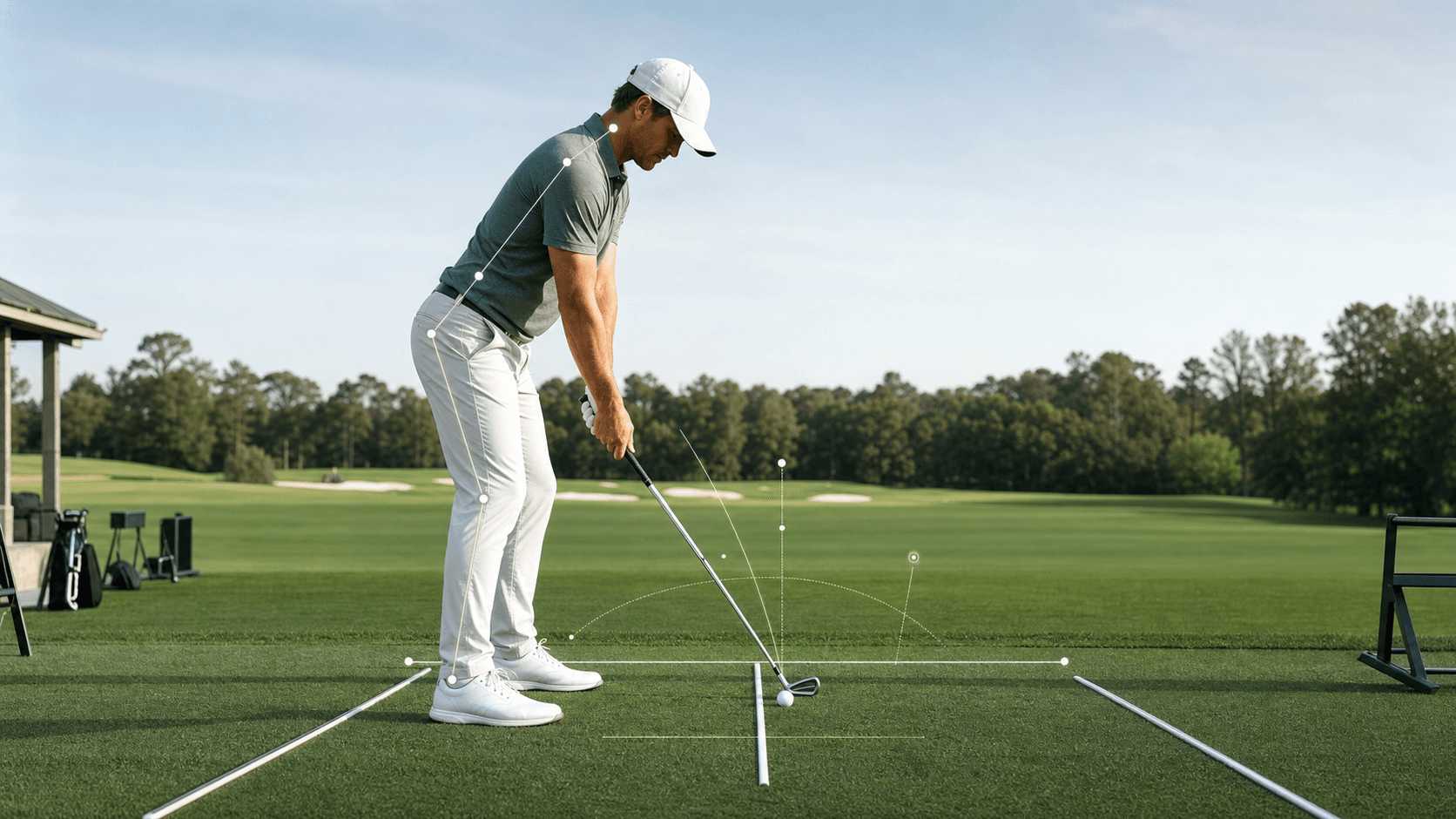
In golf, consistency is often the missing piece for weekend players. Many focus on the swing itself – the backswing, the downswing, the follow-through – without realizing that the foundation of a stable and repeatable swing begins long before the club moves. That foundation is your posture, and its direct impact on your balance.
Imagine trying to hit a powerful drive or a delicate chip shot from an unstable platform. It's nearly impossible to control the clubface, the swing path, or the contact point. This instability often stems from an improper setup posture, which compromises your ability to maintain balance throughout the entire swing motion. Without a solid, balanced posture at address, your body will naturally make compensations during the swing, leading to inconsistent strikes, loss of power, and frustration.
This article will guide you through understanding, checking, and improving your golf posture specifically to enhance your balance. We'll break down the key elements, identify common pitfalls, provide a practical checkpoint, and introduce a simple drill to help you build a more stable foundation for every shot. Our goal is to equip you with the knowledge to make your posture a reliable asset, not a hidden liability, in your quest for better golf.
Quick Answer
To achieve better golf balance, establish a proper posture by bending from your hips, not your waist, with a slight knee flex, allowing your arms to hang naturally. Distribute your weight evenly, feeling a slight pressure in the balls of your feet, but with the ability to wiggle your toes. This creates a stable base that prevents swaying or falling off balance during your swing, leading to more consistent contact and power. Regularly perform a "Posture Mirror Check" to ensure your setup maintains this balanced foundation.
The Foundation of Your Swing: Posture and Balance
Think of your golf swing as a complex athletic movement. Just like a boxer needs a stable stance to deliver a punch, or a basketball player needs balance to shoot, a golfer requires a solid base to execute a consistent swing. This base is formed by your posture at address.
Your posture dictates your center of gravity. If your posture is off, your center of gravity shifts, making it incredibly difficult to maintain balance as you rotate and transfer weight during the swing. Common issues like swaying, reverse pivoting, or falling forward/backward are often direct consequences of an unbalanced starting posture.
For example, if you stand too upright with your weight predominantly in your heels, your body will likely lean forward during the backswing to compensate, causing you to lose balance. Conversely, if you're too hunched over with your weight too far forward on your toes, you might stand up out of your posture during the downswing, leading to thin or topped shots. Neither scenario allows for consistent, powerful contact.
A well-aligned and balanced posture allows your body to rotate around a stable axis. It enables a smooth weight transfer, helps maintain your spine angle, and ensures that your arms and club can move on the intended plane. When your body is in balance from the start, it doesn't have to fight itself to stay upright, freeing up energy for clubhead speed and precise control.
Understanding Good Golf Posture for Balance
Let's break down the elements of a balanced golf posture. The goal is to create a sturdy, athletic stance that allows for dynamic movement without compromising stability.
- Bend from the Hips: This is perhaps the most crucial element. Instead of rounding your upper back or bending excessively at your waist, you should hinge forward from your hip joints. Imagine someone is gently pulling your belt buckle backward. This action keeps your spine relatively straight and sets your pelvis in a position that supports rotational movement. When you bend from the hips, your weight naturally shifts slightly towards the balls of your feet, which is ideal for balance.
- Slight Knee Flex: Once you've hinged from your hips, introduce a slight flex in your knees. This isn't a deep squat; it's just enough to take the stiffness out of your legs and allow for athletic movement. Your knees should be directly over your ankles or slightly inside them, not pushed out too far over your toes. This knee flex works in conjunction with the hip hinge to create a spring-like readiness in your lower body, crucial for generating power and maintaining balance.
- Arms Hanging Naturally: After establishing your hip hinge and knee flex, let your arms hang freely from your shoulders. They should not be reaching out for the ball, nor should they be pulled in too tightly. When your arms hang naturally, they create a comfortable distance from your body, allowing for a relaxed grip and an unhindered swing path. If you find yourself reaching, it might indicate you're standing too far from the ball, which can pull your weight forward and disrupt balance.
- Weight Distribution: This is the direct link to balance. At address, you want your weight distributed evenly between your left and right feet (for most shots, though slight variations exist for specific clubs like a driver or wedge). More importantly, from front to back, your weight should feel centered, perhaps slightly more towards the balls of your feet than your heels. A good test is to feel like you could wiggle your toes inside your shoes without falling backward, but also that you're not pressing hard into your toes. This "athletic ready" position provides stability and allows for dynamic weight shift during the swing.
When these elements come together, you create a posture that is both stable and athletic, providing the best possible platform for a balanced and powerful golf swing.
The Practical Posture Checkpoint: The "Wall Lean Test"
To quickly assess if your posture is setting you up for good balance, try the "Wall Lean Test" during your practice routine or even before a round. This checkpoint helps you feel the proper hip hinge and spinal alignment.
How to Perform the Wall Lean Test:
- Find a Wall: Stand with your back against a wall, heels about 4-6 inches away from the wall. Your head, shoulders, and glutes should be touching the wall.
- Hinge from Hips: Keeping your head and shoulders against the wall, slowly hinge forward from your hips. Your glutes should slide *up* the wall as you bend, rather than pushing *away* from it.
- Maintain Contact: As you hinge, try to keep your upper back and head lightly touching the wall for as long as possible.
- Feel the Bend: Notice the feeling in your hamstrings and glutes as you hinge. This is the correct sensation for bending from the hips.
- Add Knee Flex: Once you've hinged as far as comfortable while maintaining wall contact, add a slight flex to your knees. Your knees should move slightly forward, but your glutes should still feel connected to the wall's upward motion.
- Simulate Setup: From this position, imagine holding a golf club. Let your arms hang naturally. This is a very close approximation of a balanced golf posture.
What to Look For and Feel:
- Proper Hip Hinge: If your glutes immediately push away from the wall, you're likely bending too much from your waist or rounding your back. The goal is for your glutes to slide *up* the wall.
- Spine Angle: The wall helps you maintain a relatively straight spine. You should feel a slight arch in your lower back, not a rounded sensation.
- Weight Distribution: In this position, you should feel your weight centered or slightly towards the balls of your feet, without feeling like you're falling forward or backward.
Regularly performing this "Wall Lean Test" helps ingrain the correct feeling of bending from the hips and maintaining a stable spine angle, which are fundamental for achieving and maintaining balance throughout your golf swing. It's a simple, effective way to perform a quick posture check before you even address the ball.
Common Posture Mistakes That Hurt Balance
Many weekend golfers unknowingly adopt postures that are inherently unstable. Recognizing these common errors is the first step toward correcting them.
- Standing Too Tall or Too Bent (Over-Arching/Rounding):
- Too Tall: If you stand too upright, with insufficient hip hinge, your weight tends to be too far back on your heels. This makes it difficult to rotate freely and often leads to a "standing up" motion during the downswing, or a tendency to fall backward.
- Too Bent/Rounded Back: Conversely, if you hunch over with a rounded upper back, your weight shifts excessively to your toes. This puts strain on your lower back and makes it hard to maintain your spine angle. You might feel like you're constantly fighting gravity to stay upright, leading to an early extension or falling forward. Both extremes compromise your center of gravity and make balance a constant struggle.
- Weight Too Far Forward or Back:
- Weight on Toes: Often a result of a rounded back or reaching too far for the ball. This makes you prone to falling forward or "losing your spine angle" by standing up during the downswing. It also restricts your ability to use your lower body effectively.
- Weight on Heels: Typically seen with an overly upright posture or insufficient knee flex. This makes it hard to initiate the downswing from the ground up, leading to a tendency to sway or fall backward, especially on the follow-through. A balanced setup has your weight evenly distributed, with a slight pressure in the balls of your feet, allowing for dynamic movement.
- Over-Flexed Knees (Sitting Down):
- While some knee flex is essential, over-flexing your knees makes it look like you're "sitting down" into your posture. This can lower your center of gravity too much, making it harder to rotate and restricting the power generated from your legs. It can also cause your weight to shift too far back, leading to balance issues during the swing. Your knees should have a slight, athletic flex, not a deep bend.
These posture mistakes don't just look awkward; they actively sabotage your balance, making it nearly impossible to deliver the club consistently to the ball. By identifying and correcting these patterns, you lay the groundwork for a more stable and effective swing.
The Chubbs' Setup Balance Test
This drill is designed to help you *feel* the correct, balanced setup posture and to train your body to return to it consistently. It focuses on establishing the proper weight distribution and body angles.
How to Perform The Chubbs' Setup Balance Test:
- Find Your Spot: Stand on a flat surface, ideally in front of a mirror if possible, without a club initially.
- Start Tall: Begin by standing perfectly upright, feet shoulder-width apart, arms hanging by your sides. Feel your weight evenly distributed through your entire foot.
- Initiate the Hinge: Slowly hinge forward from your hips. As you do, imagine a string pulling your belt buckle backward. Your glutes should move slightly backward, and your upper body should tilt forward. Keep your back relatively straight, avoiding any rounding.
- Feel the Weight Shift: As you hinge, notice your weight naturally shifting from your heels towards the middle of your feet, and then slightly towards the balls of your feet.
- Add Knee Flex: Once you've hinged to a comfortable position (where your hands would naturally hang roughly below your chin if you were holding a club), introduce a slight flex in your knees. This should feel like a spring-like readiness, not a deep squat. Your knees should be over your ankles or slightly inside.
- Test Your Balance: At this point, you should feel stable. Try to gently rock slightly forward onto your toes, then slightly back onto your heels. Find the sweet spot where you feel balanced and centered, able to easily shift your weight without feeling like you're going to fall. You should be able to lift your toes slightly without falling backward, and lift your heels slightly without falling forward.
- Add the Club (Optional): Once you've found this balanced posture, pick up a club and take your grip. Let the clubhead rest on the ground. Check if your arms hang naturally without reaching or pulling in.
- Repeat and Memorize: Repeat this process several times, focusing on the *feeling* of balance and stability at each step. Close your eyes and try to replicate the feeling.
What to Look For and Feel:
- Stability: You should feel firmly planted, not wobbly.
- Athletic Readiness: Your body should feel ready to move, not stiff or locked.
- Even Weight Distribution: The sensation of your weight being centered, allowing for subtle shifts without losing balance.
- No Strain: You shouldn't feel excessive strain in your lower back or hamstrings. If you do, you might be over-hinging or rounding your back.
The Chubbs' Setup Balance Test helps you develop proprioception – your body's awareness of its position in space. By consciously feeling and adjusting your posture, you train your body to adopt a more balanced setup automatically. Consistent practice of this test will make a proper, balanced posture a natural part of your pre-shot routine.
For video-informed feedback on a visible posture pattern, upload one clear clip at /upload. Chubbs AI will flag one priority to test; it cannot measure pressure or diagnose a physical limitation from video.
Integrating Posture into Your Pre-Shot Routine
A great posture isn't a one-time fix; it's a habit. The most effective way to ensure consistent posture for better balance is to integrate a quick posture check into your pre-shot routine.
Here's a simple sequence you can adopt:
- Stand Behind the Ball: As you walk up to your ball, stand directly behind it, facing your target. This helps you visualize the shot and mentally commit to your target line.
- Visualize Your Posture: Take a moment to mentally recall the feeling of your balanced posture from the "Chubbs' Setup Balance Test."
- Approach the Ball: As you step into your address position, focus on building your posture from the ground up:
- Feet First: Set your feet shoulder-width apart (or slightly wider for driver, narrower for wedges).
- Hinge from Hips: Initiate the bend from your hips, letting your glutes move back.
- Slight Knee Flex: Add a soft bend to your knees.
- Arms Hang: Let your arms hang naturally, taking your grip.
- Weight Check: Do a quick mental check: "Am I balanced? Can I wiggle my toes? Do I feel centered?"
- Final Glance: Take one last look at the target, then settle into your balanced posture, ready to swing.
By making this a consistent part of your routine, you'll train your body to automatically find that stable, balanced setup every time, reducing the chances of balance-related errors during your swing.
Why Balance Matters Beyond the Swing
The benefits of good posture and balance extend far beyond simply hitting the ball better.
- Consistency: A stable base allows for a more repeatable swing path and clubface control, leading to more consistent contact and predictable ball flight.
- Power: When your body is balanced, it can efficiently transfer energy from the ground up through your core to the clubhead. Without fighting for balance, more of your athletic effort can go into generating clubhead speed.
- Reduced Strain: An unbalanced posture can put undue stress on your back, knees, and other joints as your body tries to compensate. A balanced posture distributes forces more evenly, potentially reducing the risk of discomfort or injury over time. (Always consult a medical professional for any pain or injury concerns.)
- Confidence: Knowing you have a solid, balanced foundation for every shot instills confidence, allowing you to focus on the target and execute your swing without worrying about falling over.
If you find yourself consistently struggling with balance despite working on your posture, or if you experience any discomfort, it might be beneficial to seek personalized guidance. To describe the pattern and choose one next step, start an AI coaching conversation with Chubbs.
Quick Checklist: Your Posture for Balance
Use this checklist before each shot to ensure you're setting up for optimal balance:
- Feet: Shoulder-width apart, stable base.
- Hips: Hinging forward, not bending at the waist. Glutes slightly back.
- Knees: Slight, athletic flex, not a deep squat.
- Arms: Hanging naturally, not reaching or pulled in.
- Weight Distribution (Front-to-Back): Centered, with slight pressure on the balls of your feet. Can you wiggle your toes?
- Weight Distribution (Left-to-Right): Evenly distributed.
- Spine: Relatively straight, not rounded or overly arched.
- Feeling: Stable, athletic, ready to move without feeling wobbly.
Frequently Asked Questions (FAQ)
Q: How often should I check my posture? A: Ideally, you should perform a quick mental posture check as part of your pre-shot routine for every shot. During practice sessions, dedicate 5-10 minutes specifically to the "Chubbs' Setup Balance Test" and the "Wall Lean Test" to reinforce the proper feel.
Q: Can poor posture affect my swing path? A: Absolutely. An unbalanced posture often forces your body to make compensations during the swing. For example, if your weight is too far forward, you might stand up in the downswing, causing an "over the top" move. If your weight is too far back, you might fall backward, leading to a "casting" motion or an inside-out path that's too shallow. A stable posture helps maintain your spine angle and allows the club to stay on a more consistent path.
Q: What if I have physical limitations that make a "perfect" posture difficult? A: It's important to work within your body's capabilities. The goal is to find the *most stable and balanced* posture *for you*. If you have back pain, hip limitations, or knee issues, consult a physical therapist or medical professional first. Then, work with a golf coach who can help you adapt the principles of good posture to your specific physical situation. The core idea of creating a stable base remains, even if the exact angles need to be modified.
Q: Is it okay to feel a little weight in my toes? A: A *slight* pressure in the balls of your feet is generally ideal, as it promotes an athletic, ready-to-move stance. However, if you feel like your weight is *excessively* on your toes, to the point where you might fall forward, that's an indication of an unbalanced posture, likely due to a rounded back or standing too far from the ball. The key is balance – you should feel stable enough to easily shift your weight without losing your footing.
Q: Does posture change for different clubs? A: The fundamental principles of hip hinge, knee flex, and natural arm hang remain consistent. However, there will be subtle adjustments. For a driver, your stance will be wider, and your ball position further forward, which might lead to a slightly more upright posture with a bit more tilt away from the target. For wedges, your stance might be narrower, and you might stand slightly closer to the ball. The goal is always to maintain a balanced, athletic setup for the specific shot you're trying to hit.
Conclusion
Your golf posture is not just how you stand; it's the bedrock of your balance, consistency, and power in the golf swing. By taking the time to understand, check, and refine your setup posture, you're investing in a more stable and effective golf game.
Remember, the goal is to create an athletic, balanced foundation that allows your body to move freely and powerfully without having to fight for stability. Use the "Wall Lean Test" and the "Chubbs' Setup Balance Test" to build the feel of a proper posture, and integrate a quick posture check into every pre-shot routine.
A balanced posture leads to a balanced swing, and a balanced swing leads to better golf. Start with your setup, and watch your entire game improve.