

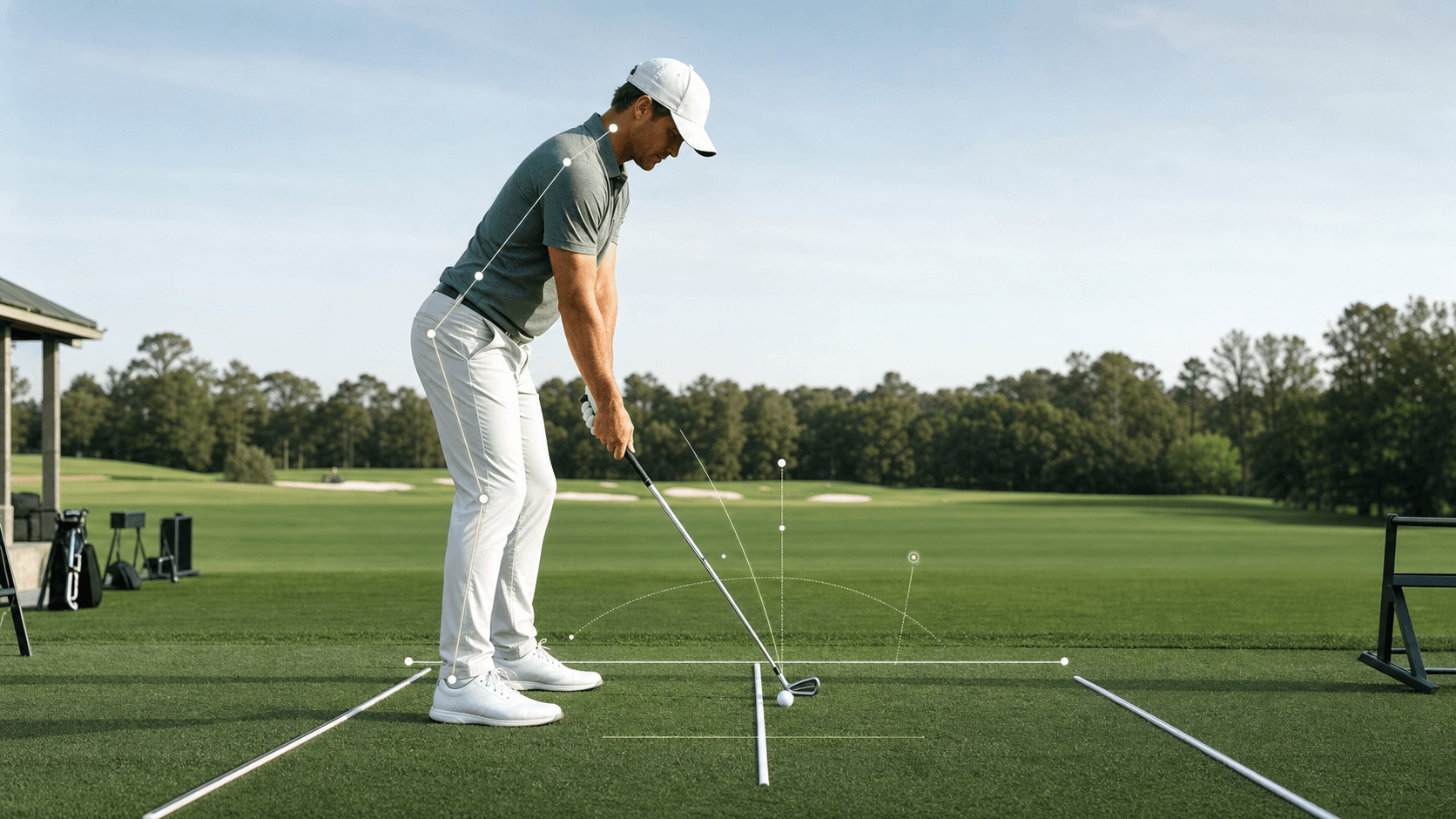
For many weekend golfers, the desire to hit the ball perfectly straight often leads to an unintended consequence: steering. Instead of allowing the club to swing freely and powerfully, you might find yourself trying to "guide" or "steer" the clubface through impact, hoping to control the ball's direction. This common habit can be a major roadblock to consistent ball striking, power, and overall enjoyment of the game.
As Chubbs, your Straight Line Golf Pro AI, my goal is to help you understand why steering happens and provide a clear, calm path to replace this habit with a more natural, effective golf swing. We'll focus on one issue, one reason, and a direct fix, ensuring you can apply these principles on the range and the course.
Quick Answer
Steering the golf ball is primarily an attempt to control the clubface with the hands and arms through impact, rather than allowing the body's natural rotation to release the club. This often results in a loss of power, inconsistent contact, and a limited follow-through. The core fix involves trusting your body's turn, establishing a neutral grip, and allowing the club to release naturally through impact, leading to a more powerful and consistent swing. Focus on a committed, full body rotation rather than hand manipulation.
Understanding the Steering Tendency
Imagine trying to drive a car by constantly micro-adjusting the steering wheel with tiny, jerky movements, rather than letting the car naturally follow the road. That's a bit like what happens when you steer the golf club. You're trying to impose control where natural momentum and rotation should take over.
What Steering Looks Like and Feels Like:
- Visually: You might see a golfer "holding off" their finish, or their hands and arms looking tense and restricted through impact. The clubhead might not fully release, or the swing path might look forced rather than fluid.
- Feel: It often feels like you're trying to "push" the ball towards the target, or that your hands are working independently to square the clubface. There's a sensation of effort and control through impact, rather than a relaxed, powerful "whip" of the clubhead.
- Results: The ball flight might be weak, often a block to the right (for a right-handed golfer) or a pull-hook if you overcompensate. You'll likely experience a significant loss of distance because the clubhead speed is reduced, and the energy isn't transferred efficiently to the ball. Thin shots, fat shots, and inconsistent contact are also common hallmarks of steering.
The intention behind steering is usually good: you want to hit the ball straight. However, the golf swing is a dynamic, rotational movement, and trying to manually guide the club through a precise point in space often hinders the very mechanics that create power and consistency.
The Root Cause: Over-Control and Inhibited Release
At its heart, steering stems from a fundamental misunderstanding or distrust of the swing's natural release. Golfers often feel they *must* actively square the clubface at impact to hit the ball straight. This leads to:
- Excessive Hand and Arm Dominance: Instead of the body leading the downswing and creating the rotational force, the hands and arms take over. They try to "point" the clubface at the target.
- Lack of Body Rotation: When the hands and arms dominate, the body's natural turn through impact is often inhibited. This prevents the powerful, athletic motion that generates clubhead speed.
- Delayed or Non-Existent Release: The "release" in golf refers to the natural unhinging of the wrists and rotation of the forearms that allows the clubhead to accelerate and square up through impact. When you steer, you actively prevent this release, keeping the clubface open or closed relative to the path, and robbing your swing of power.
This over-control is often a defensive reaction, perhaps after hitting a few errant shots. The instinct is to try harder to control the club, but in golf, more control often means less freedom and less effective movement.
The Fix: Embracing Natural Rotation and Release
Stopping the steering tendency involves shifting your focus from manipulating the club with your hands to allowing your body's rotation to power and guide the swing. This means trusting the club to do its job as a pendulum and leveraging your body's athletic movement.
1. Setup for Success
Your setup is the foundation. Small adjustments here can significantly impact your ability to swing freely.
- Neutral Grip: A grip that is too strong or too weak can encourage steering as you try to compensate for a misaligned clubface. Aim for a neutral grip where the club sits primarily in the fingers of your lead hand, and the V-shape formed by your thumb and forefinger points roughly between your right shoulder and chin (for a right-handed golfer). This allows the wrists to hinge and unhinge naturally.
- Athletic Posture: Stand tall, then hinge from your hips, allowing your arms to hang naturally. Your knees should have a slight flex. This posture promotes balance and allows your body to rotate freely without restriction. Avoid hunching or standing too upright, which can restrict your turn.
- Proper Alignment: Ensure your body (feet, hips, shoulders) is aligned parallel to your target line, not aimed directly at it. If you're misaligned, you'll subconsciously try to steer the ball back to the target, creating bad habits. Use alignment sticks or pick an intermediate target a few feet in front of the ball to check your aim.
2. The Backswing: Building a Foundation for Release
The backswing isn't just about lifting the club; it's about coiling your body to create power.
- Full Body Turn: Focus on turning your shoulders and hips away from the target. Feel the weight shift into your trail foot. Your arms should swing up *as a result* of this turn, not independently. A full, uninhibited turn sets the stage for a powerful, uninhibited downswing and release.
- Maintain Wrist Hinge: Allow your wrists to hinge naturally as the club goes back. Don't try to hold them stiff or force them into a specific position. This hinge stores energy that will be released later.
3. The Downswing and Impact: Trusting the Turn
This is where the magic happens and where steering is most often corrected.
- Initiate with the Lower Body: The downswing should start with your lower body. Feel your lead hip rotating open and shifting towards the target. This creates a chain reaction, pulling your upper body and arms through.
- Let the Clubhead Lead: As your body turns, allow the clubhead to "sling" or "whip" through the impact zone. Your hands and arms are simply conduits for the power generated by your body's rotation.
- The "Release": This is critical. As your body rotates, your forearms will naturally rotate, and your wrists will unhinge, allowing the clubface to square up and then close past impact. This is not something you *do* with your hands; it's something you *allow* to happen as a result of a committed body turn. Imagine throwing a frisbee or skipping a stone – there's a natural release point where you let go, allowing the object to fly. The golf swing has a similar release.
- **Focus on Turning *Through* the Ball:** Instead of trying to hit *at* the ball, think about turning your chest and hips *through* the ball towards the target. The ball simply gets in the way of a committed, rotational swing.
4. The Follow-Through: A Reflection of Freedom
A full, balanced follow-through is a strong indicator that you haven't steered.
- Unrestricted Finish: Your body should naturally finish facing the target, with your weight predominantly on your lead foot. Your hands should be high and your belt buckle pointing towards the target.
- No Holding Back: If you're steering, you'll often see a truncated or unbalanced finish, as you try to "hold off" the clubface. A full finish means you've committed to the swing and allowed the club to release.
Practical Checkpoint: The "Lead Arm Extension" Check
Before you even swing, this checkpoint helps you understand if you're setting up to steer or to release.
- Address the Ball: Take your normal setup with a mid-iron.
- Extend Lead Arm: Without moving your body, extend your lead arm (left arm for right-handed golfers) straight out in front of you, parallel to the ground.
- Observe Clubface: Look at the clubface. Is it square to your target line? Or is it slightly open or closed?
- Feel for Tension: Notice if your lead arm and shoulder feel tense or relaxed.
What it tells you: If your lead arm feels tense, or if the clubface is significantly open or closed when extended, it suggests you might be trying to manipulate the clubface with your hands *before* you even start the swing. A relaxed, naturally extended lead arm with a relatively square clubface indicates a more neutral setup, allowing for a natural release. If you find tension or misalignment, adjust your grip and posture to achieve a more neutral, relaxed position.
Named Drill: The "L-to-L Release Rhythm" Drill
This drill is excellent for feeling the natural release of the club without the pressure of a full swing.
- Setup: Take a normal stance with a mid-iron.
- Half Backswing (L-Shape): Make a backswing where your lead arm is parallel to the ground, and the club shaft forms an "L" shape with your lead arm. Focus on a smooth, coordinated turn, not just lifting your arms.
- Swing Through (Second L-Shape): From this position, initiate your downswing with your lower body, turning through the ball. The goal is to feel the clubhead "sling" through impact. As you swing through, allow your wrists to naturally release and re-hinge, creating another "L" shape on the follow-through, with your trail arm parallel to the ground and the club shaft forming an "L" with your trail arm.
- Focus on Rhythm: The key is to feel a smooth, continuous rhythm, allowing the clubhead to accelerate naturally through the impact zone without conscious manipulation of the hands. The "L-to-L" motion emphasizes the natural rotation and release of the club.
- Exaggerate the Finish: Ensure a full, balanced finish where your body is turned towards the target.
Key Feeling: During this drill, focus on the sensation of the clubhead swinging past your hands *effortlessly*. You're not trying to *hit* the ball with your hands; you're letting the momentum of the club and your body's turn create the strike. Start with slow, deliberate swings, then gradually increase speed as you get comfortable with the feeling of the release.
When to Seek More Help
While these principles are foundational, sometimes a persistent habit like steering benefits from a personalized look. If you find yourself struggling to implement these changes or aren't seeing the desired results, consider a more direct assessment.
You can always submit a swing video to Chubbs for a personalized analysis. Just head over to /upload, and I'll provide specific feedback tailored to your swing patterns. For more direct interaction and guided instruction, explore the resources available at /coach. A fresh pair of (AI) eyes can often spot subtle tendencies that are hard to identify on your own.
Quick Checklist: Stopping the Steering Tendency
- Check Your Grip: Ensure it's neutral, allowing for natural wrist hinge and release.
- Adopt Athletic Posture: Promote free body rotation.
- Confirm Alignment: Ensure your body is aligned parallel to the target line.
- Prioritize Body Turn: Initiate both backswing and downswing with your body's rotation, not just your arms.
- Trust the Release: Allow your wrists and forearms to unhinge and rotate naturally through impact. Don't hold back.
- Commit to the Finish: Aim for a full, balanced follow-through, indicating a complete swing.
- Practice the "L-to-L Release Rhythm" Drill: Feel the clubhead sling past your hands.
- Use the "Lead Arm Extension" Check: Assess your setup for tension and clubface alignment.
FAQ: Common Questions About Steering
Q: Is steering the same as a slice? A: Not exactly, but steering can *cause* a slice. A slice is typically caused by an open clubface relative to the swing path. Steering often involves holding the clubface open or manipulating it in a way that prevents it from squaring up, leading to a slice or a weak block. It's a *cause* of many ball flight issues, including slices.
Q: How can I tell if I'm steering the club? A: Common signs include a feeling of "pushing" the ball, a lack of power, inconsistent contact (thin or fat shots), a truncated or unbalanced follow-through, and ball flights that are consistently weak, blocked, or pulled. If your hands feel overly active through impact, you might be steering.
Q: Will stopping steering cost me accuracy? A: Initially, it might feel less accurate as you adjust to a new motion. However, in the long run, stopping steering will *improve* your accuracy and consistency. A natural release allows the clubface to square up more consistently and powerfully, leading to more predictable ball flights and better control. True accuracy comes from repeating a free, uninhibited motion, not from forced manipulation.
Q: Does my grip really affect steering? A: Absolutely. A grip that is too strong can encourage you to "hold off" the release to prevent hooking, while a grip that is too weak might make you try to "force" the clubface square, both leading to steering tendencies. A neutral grip provides the best foundation for a natural, uninhibited release.
Q: I feel like I lose control if I don't steer. How do I overcome that fear? A: This is a common mental hurdle. The "fear of the miss" often drives steering. Focus on the process, not the outcome. Practice the drills slowly, feeling the natural motion. Understand that true control in golf comes from a repeatable, athletic motion, not from trying to guide the ball with your hands. Trust your body's ability to rotate and release. Start with shorter swings and smaller targets, gradually building confidence.
Conclusion
Stopping the steering tendency in your golf swing is a significant step towards unlocking more power, consistency, and enjoyment on the course. It requires a shift in mindset—from trying to control the club with your hands to trusting your body's natural rotation and the club's inherent design to release.
By focusing on a neutral setup, initiating your swing with your body, and allowing for a natural release through impact, you'll replace tension and manipulation with fluidity and power. Be patient with yourself, practice these concepts diligently, and remember that the most effective golf swing is often the one that feels the most free.
Chubbs is here to help you find that straight line to better golf. Keep swinging freely!