

At home, rehearse a smooth change of direction with small, comfortable motions and no ball. The aim is repeatable rhythm, not a faster swing or a universal timing ratio.
Make room before making a motion
Use empty hands when space is limited. If you use a club, check clearance above, behind and on both sides before moving it; keep people, pets and breakable objects away. Stop if any movement causes pain.
PGA guidance includes tempo and rhythm work among simple golf practice exercises. PGA: Four Practice Drills. The routine here is a short SLGP rehearsal, not a fitness program.
A five-minute rhythm session
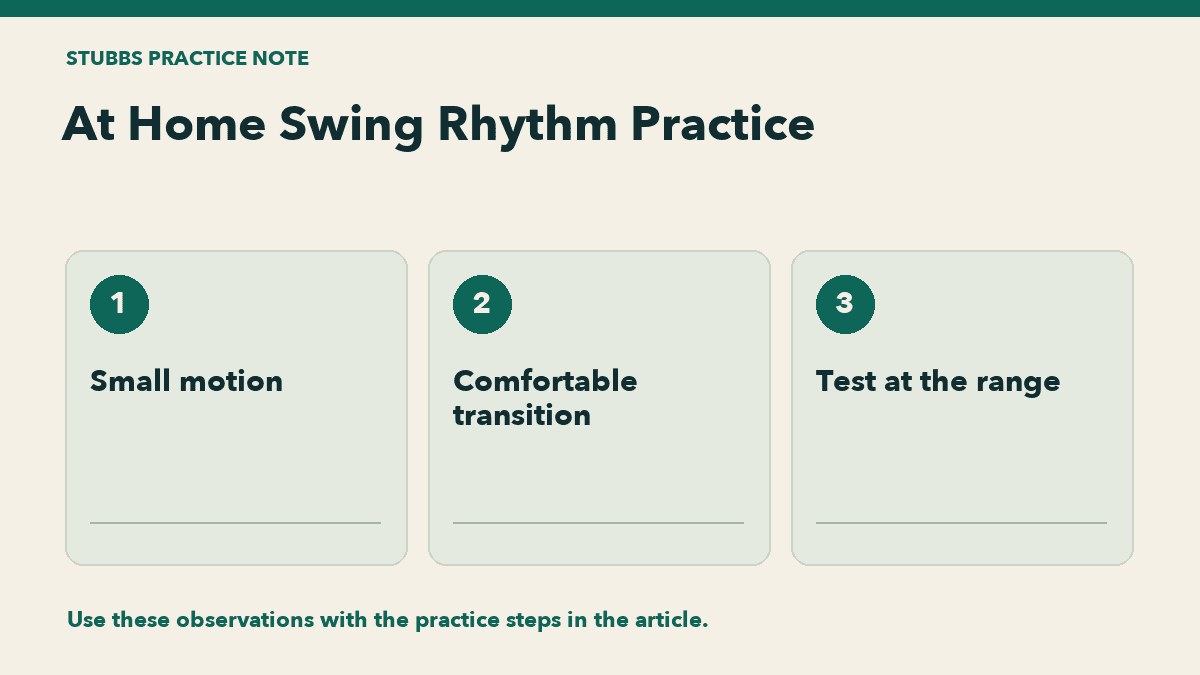
- Stand comfortably and make five small back-and-through motions with empty hands.
- Say “back” during the backswing and “through” during the forward motion. Let the words follow a comfortable movement rather than rushing to a beat.
- Make five more rehearsals with attention only to the change of direction. Keep breathing normally.
- Rest briefly, then repeat at the same comfortable size. Stop adding motion if you lose balance or room.
- Finish with one rehearsal you could repeat without effort. There is no need to work up to full speed indoors.
Check whether it transfers
At the range, warm up and try a few short iron shots with the same unhurried transition. Compare contact and balance with your usual swing. A smooth home rehearsal is not proof of improved ball striking; the ball-contact test comes later.
Do not turn rhythm practice into a list of positions to hold. Use the practice planning guide to fit short sessions around range work, or ask Stubbs how to keep one cue.