

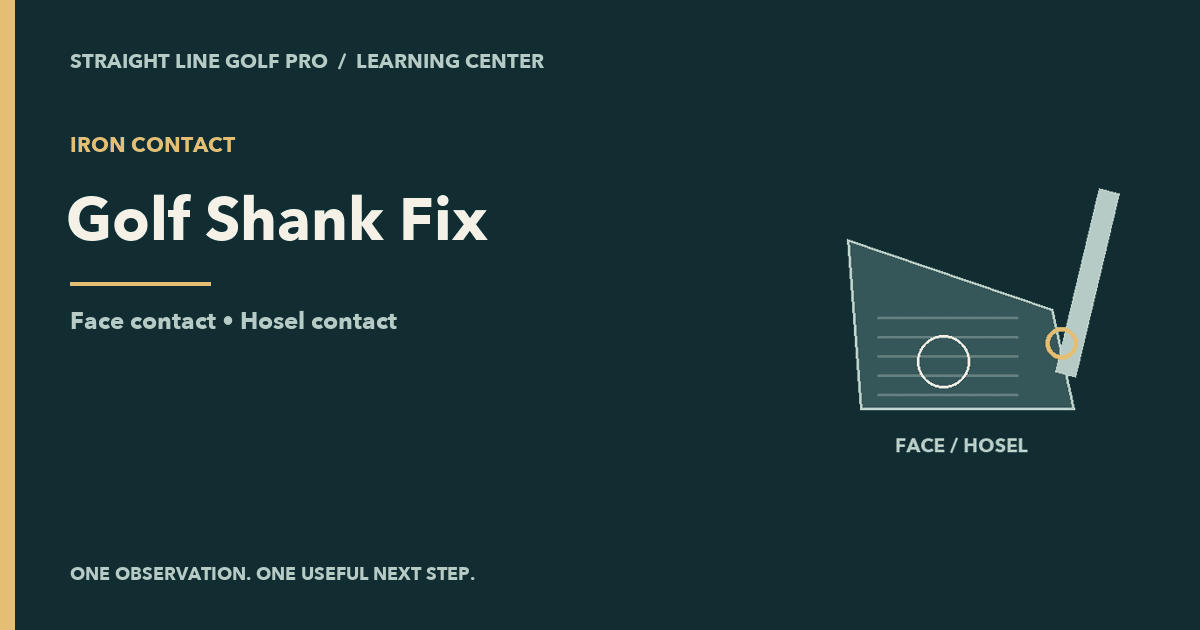
Before choosing a shank fix, confirm the strike location. A ball that shoots sideways needs a contact check; it does not automatically prove one particular swing-path problem.
Identify the part of the club that met the ball
On an iron, a shank commonly refers to contact at the hosel, where the shaft joins the head. That differs from a shot struck on the face with an unusual launch direction. Impact tape made for practice can help distinguish the two.
PGA professional Mark Russo defines a shank as a hosel strike and describes more than one delivery pattern that can cause it. Mark Russo: Shank Contact. A qualified coach can help confirm the strike if the marks are unclear.
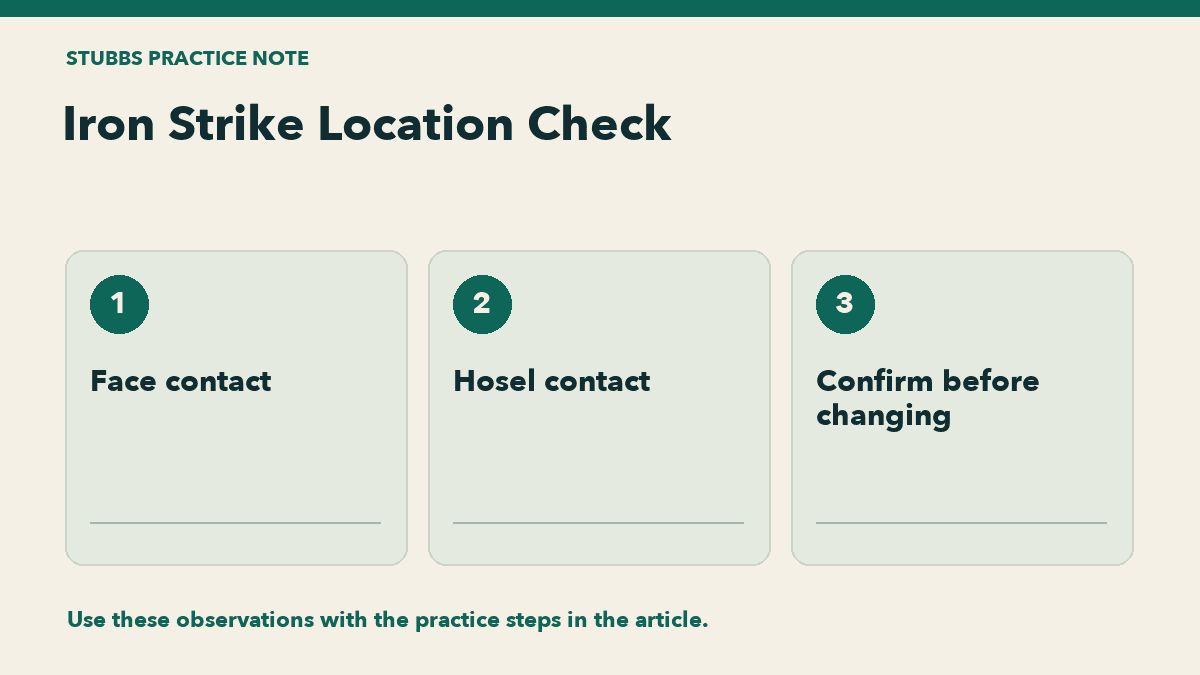
Reset with a small-swing check
- Move to a practice position with generous safe space in the direction of the miss. Stop if nearby golfers could be at risk.
- Choose a short iron and a comfortable, balanced setup.
- Make several small rehearsals, then hit one gentle shot. Inspect contact before continuing.
- Record five strikes as face, heel/hosel or uncertain. Keep distance out of the goal.
- If the contact remains near the hosel, pause the session and get a coach to check setup and delivery rather than hitting faster.
Avoid an opposite extreme
Standing dramatically farther away or forcing the club far inside can introduce another problem. Use the strike evidence to choose the next question instead of copying a fix based only on the direction of the ball.
This SLGP reset is an observation exercise, not a guaranteed cure. A clear swing video, together with the contact mark and club used, gives Stubbs more context than “it went sideways.”