

Build a grip you can repeat without turning the clubface as you settle into address. Check hand placement and comfort first; more squeeze or an extreme hand rotation is not an automatic fix.
Understand what a grip change changes
PGA instructor Bernie Najar describes different grip positions and how hand placement relates to clubface and wrist movement. PGA: The Right Grip for You.
“Strong” and “weak” describe orientation, not how hard to squeeze. A comfortable hold should keep the club secure without requiring you to tense your whole forearm. The right choice can vary with the golfer and the shot.
A five-rebuild grip check
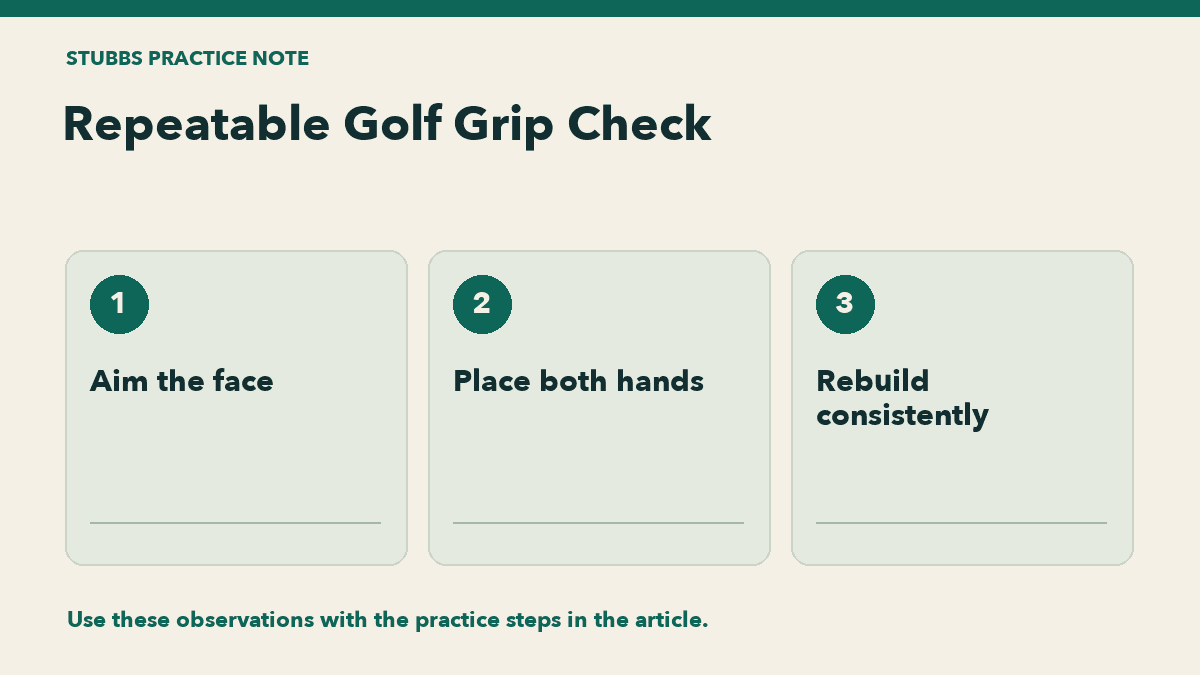
- With a short iron, aim the face at a clear reference before taking your full stance.
- Place your lead hand, then add the trail hand in your usual comfortable grip.
- Notice whether adding the second hand turned the face. Reset if it did.
- Release and rebuild the grip five times. A setup photograph can help you compare hand position without relying on memory.
- Try a few small range shots with that repeatable hold, recording start line and contact.
Do not use one number as a rule
Pressure scales such as four out of ten are personal feelings, not calibrated measurements. The useful question is whether the club stays secure while your motion remains comfortable. Stop a grip change that causes pain or strain.
If a repeated slice or hook remains, ask a coach to assess grip alongside face, path and contact. See straighter-shot grip basics for context, or talk through the pattern with Stubbs. The five-rebuild check is an SLGP practice suggestion.