

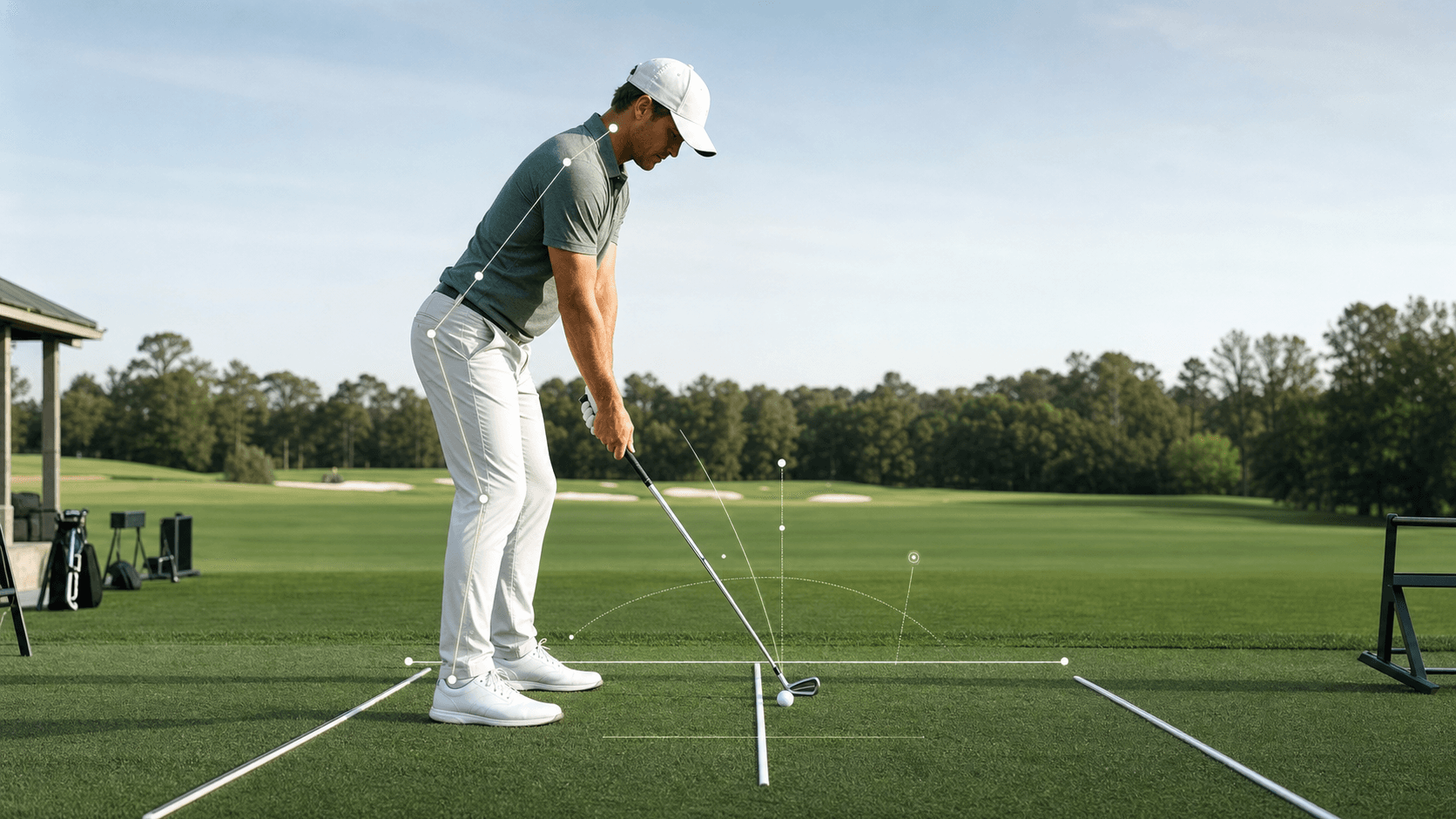
The approach shot is where many weekend golfers gain or lose strokes without even realizing it. It's not always about the swing itself; often, it's about the decision made *before* the swing. Selecting the right club for your approach shot is a critical skill, one that separates consistent scorers from those who leave strokes on the course. It requires more than just knowing the yardage to the pin; it demands a thoughtful assessment of multiple factors.
This guide from Chubbs at Straight Line Golf Pro (SLGP) will provide you with a systematic approach – a clear checklist – to confidently choose the correct club for every approach shot. Our aim is to simplify this process, helping you make smarter choices that lead to more greens in regulation and closer putts.
Quick Answer
For effective approach shot club selection, always consider these five core elements: true distance (accounting for elevation), wind (direction and strength), lie (how the ball sits), green characteristics (pin position, firmness, slope), and your personal game (confidence, typical shot shape). Start by measuring the yardage, then adjust for external factors and your own tendencies. When in doubt, err on the side of taking one more club to ensure you reach the target, especially into the wind or to an elevated green.
Understanding Your Tools: The Foundation of Selection
Before you can effectively use an approach shot club selection checklist, you must understand your own tools – your golf clubs. This isn't just about knowing you have a 7-iron; it's about knowing *your* 7-iron.
1. Know Your Own Distances: This is non-negotiable. Every golfer hits clubs different distances. Your 7-iron might carry 150 yards, while another golfer's might carry 135 or 165.
- The Issue: Many golfers guess their club distances or rely on general averages.
- The Reason: This leads to inconsistent results, leaving shots short, long, or in hazards.
- The Fix: Dedicate time to accurately measure your carry distances for each iron and wedge. Use a launch monitor, a well-marked range, or even a GPS device on the course to track actual carries.
- The Drill: (See "The 'Ladder Drill' for Distance Gapping" below).
2. Consistent Contact is Key: Your club distances are only reliable if you make consistent contact. A perfectly struck 8-iron will go a specific distance, but a thin or fat shot will travel significantly less.
- SLGP Tip: If your contact is inconsistent, focus on that first. A consistent strike makes all other club-selection factors more predictable. Upload a clear swing video for a video-informed Chubbs AI review and one drill to test.
3. A Rangefinder Isn't Enough: While a rangefinder provides a precise yardage to the pin, it's only one piece of the puzzle. It tells you the *physical distance*, but not the *effective distance* your ball needs to travel to account for wind, elevation, or lie.
The Core Variables: What to Consider Beyond Distance
Once you know your own club distances, it's time to layer in the variables that influence your final club choice. This is where the "checklist" truly comes into play.
1. True Distance to Target:
- Measure: Use a rangefinder or GPS to get the exact yardage to the pin.
- Adjust for Elevation:
- Uphill Shot: The ball will fly shorter. Add yardage to your measured distance. A good rule of thumb is to add 1 yard for every 10 feet of elevation gain. So, if it's 150 yards to a pin 30 feet up, play it like 153 yards.
- Downhill Shot: The ball will fly longer. Subtract yardage. Subtract 1 yard for every 10 feet of elevation drop. A 150-yard shot to a pin 30 feet down might play like 147 yards.
- Result: This gives you your "adjusted yardage" – the distance your club needs to cover.
2. Wind: Wind is a major factor that many weekend golfers underestimate.
- Direction: Is it a headwind, tailwind, or crosswind?
- Strength: Is it a gentle breeze or a strong gust?
- Impact:
- Headwind: Requires more club. A strong headwind can easily take 1-2 clubs off your shot.
- Tailwind: Requires less club. A strong tailwind can add 1-2 clubs.
- Crosswind: Will push the ball offline and can slightly affect distance. If it's a strong left-to-right wind, it might take a little off the carry, and vice-versa.
- Checkpoint: The 'Green Light, Red Light' Wind Checkpoint: Before every approach shot, look up and assess the wind.
- Green Light: Little to no wind. Proceed with your adjusted yardage.
- Yellow Light: Light breeze. Consider a half-club adjustment, or focus on a slightly firmer or softer swing.
- Red Light: Moderate to strong wind. This is your cue to make a full club adjustment (or more). If it's a headwind, take more club and swing smoothly. If it's a tailwind, take less club and control your trajectory. *Never ignore a red light wind.*
3. Lie: How the ball is sitting can dramatically alter how it flies.
- Perfect Lie (Fairway): Expect your standard distance.
- Fluffy Lie: The ball is sitting up on grass. This can lead to less spin and a slightly longer flight, but also a higher chance of a "flyer" that goes unexpectedly far.
- Tight Lie: The ball is sitting down on bare or very short grass. This makes it harder to get under the ball, often resulting in less loft and potentially a shorter, lower shot. You might need to take more club or play for a lower trajectory.
- Rough:
- Light Rough: Ball might sit up, similar to a fluffy lie.
- Heavy Rough: The grass will grab the club, significantly reducing clubhead speed and spin. Expect a much shorter shot, potentially 1-2 clubs less distance, and less control. You'll likely need to take significantly more club to reach the target, or choose a club that prioritizes getting out and onto the green, even if it's short.
4. Green Characteristics: The target itself influences club choice.
- Pin Position:
- Front Pin: You want to land the ball softer, often requiring a higher lofted club or a softer swing with a standard club.
- Back Pin: You can be more aggressive, potentially landing the ball a bit further onto the green and letting it roll. This might mean hitting a slightly longer club or a firmer swing.
- Middle Pin: Standard play.
- Green Firmness:
- Soft Green: The ball will stop quickly. You can be more aggressive with your landing spot.
- Firm Green: The ball will bounce and roll out. You need to land the ball shorter of the pin, allowing for the roll. This might mean taking one less club than the yardage suggests, or choosing a club with more loft to create a steeper landing angle.
- Green Slope: If the green slopes significantly from front to back, landing short might roll you back off. If it slopes back to front, landing long could leave a difficult downhill putt.
- Obstacles: Water, bunkers, or out-of-bounds behind the green should always be considered. It's often safer to be short of a back bunker than long into trouble.
5. Your Personal Game (Current Feel & Shot Shape):
- Confidence: Are you confident with a specific club today? Sometimes, choosing a club you feel good about, even if it's a slight deviation from the "perfect" club, can lead to better results.
- Typical Shot Shape: Do you naturally draw or fade the ball?
- Draw: Tends to fly slightly lower and run more.
- Fade: Tends to fly slightly higher and stop quicker.
- Account for this when aiming and considering roll-out.
- Current Swing Feel: Are you feeling strong and hitting it well, or a bit tired and struggling with contact? Adjust accordingly. If you're struggling, take an extra club and swing easy.
The SLGP Approach Shot Club Selection Checklist in Action
Let's put it all together with a systematic thought process:
- Get the Raw Yardage: Use your rangefinder or GPS to measure the distance to the pin. (e.g., 155 yards).
- Adjust for Elevation: Is it uphill or downhill? (e.g., 20 feet uphill = add 2 yards. New adjusted yardage: 157 yards).
- Assess the Wind (Green Light, Red Light): Is it a headwind, tailwind, or crosswind? How strong? (e.g., Moderate headwind = add 1 club, let's say 10-12 yards. New adjusted yardage: 167-169 yards).
- Evaluate the Lie: Is it perfect, fluffy, tight, or in the rough? (e.g., Perfect fairway lie, no adjustment needed here).
- Consider Green Characteristics: Pin position (front/middle/back), firmness, slope, and surrounding hazards. (e.g., Pin is middle-back, green is firm with a bunker long. This means I want to land it short of the pin and let it roll, or use a higher lofted club to stop it. Given the firm green, I might even subtract a few yards from my *target* landing spot, or choose a club that will land softer).
- Factor in Your Personal Game: How are you feeling? What's your typical shot shape today? (e.g., Feeling good, hitting a slight draw. The draw will fly a bit lower and run, so I need to account for that roll).
Example Scenario:
- Raw Yardage: 155 yards to the pin.
- Elevation: 20 feet uphill (+2 yards) -> 157 yards.
- Wind: Moderate headwind (+1 club, ~10-12 yards) -> ~167-169 yards *effective distance*.
- Lie: Perfect.
- Green: Firm, middle-back pin, bunker long. I want to land it short of the pin and let it release, or hit a higher shot.
- My Clubs: My 7-iron carries 150 yards, my 6-iron carries 165 yards.
Decision Process: My effective distance is around 167-169 yards. My 7-iron is too short. My 6-iron is 165 yards. This feels like the right club. However, the green is firm, and there's a bunker long. If I hit my 6-iron perfectly, it might go 165 and release into the bunker.
- Option 1: Hit a very controlled, smooth 6-iron, aiming to land it slightly short of the pin, knowing it will release.
- Option 2: Take the 7-iron and hit it with a slightly firmer swing, knowing it might come up a little short but will be safe from the bunker.
- Chubbs' Recommendation: Given the headwind and firm green with a bunker long, the safer play is often to take *more club* (the 6-iron) and swing *easier* or *smoother* to control the distance and trajectory. This allows you to reach the target without forcing the swing. Alternatively, if you're very confident in a high, soft 7-iron, that could work. But the 6-iron with a controlled swing is generally the more reliable choice here to reach the effective distance without over-swinging.
Improving Your Club Selection Acumen
Making better club selections is a skill that improves with practice and self-awareness.
Drill: The 'Ladder Drill' for Distance Gapping
- Purpose: To precisely learn your carry distances for each club and understand how different swing efforts affect those distances.
- How to Perform:
- Go to a driving range with clear yardage markers or a launch monitor.
- Pick a specific club, for example, your 8-iron.
- Hit 5-10 shots with a full, comfortable swing. Note the average carry distance.
- Now, hit 5-10 shots with a 3/4 swing (shorter backswing, less aggressive follow-through). Note the average carry.
- Finally, hit 5-10 shots with a 1/2 swing (even shorter backswing, minimal follow-through). Note the average carry.
- Repeat this process for every iron and wedge in your bag.
- Benefit: You'll create a "distance ladder" for each club (full, 3/4, 1/2), giving you more options than just "full swing" or "chip." This significantly enhances your approach shot club selection checklist by giving you more precise tools.
Track Your Shots: Pay attention to where your approach shots actually land versus where you intended them to. Did you consistently come up short? Did you fly over the green? This feedback is invaluable. Consider using a shot-tracking app or even just a notebook. Seeing how your swing performs under pressure can reveal patterns that impact your club selection. For feedback grounded in your clip, upload a clear swing video for a video-informed Chubbs AI review; to add context, start an AI coaching conversation.
When to Consult a Coach: If you consistently struggle with distance control, have a wide gap between clubs, or find your club selection decisions are often wrong, it might be time for personalized guidance. Visit /coach to learn more about how we can help refine your game. To describe the pattern and choose one next step, start an AI coaching conversation with Chubbs.
Quick Checklist: Approach Shot Club Selection
Keep this mental checklist handy for every approach shot:
- Measure Raw Yardage: What's the exact distance to the pin?
- Adjust for Elevation: Uphill (+) or Downhill (-)?
- Assess Wind: Headwind (+club), Tailwind (-club), Crosswind (adjust aim/minor distance)? (Green Light, Red Light Checkpoint)
- Evaluate Lie: Perfect, fluffy, tight, rough? How will it affect distance/spin?
- Green Check: Pin position, firmness, slope, hazards? Where do I *need* to land it?
- Self-Check: What club feels confident? How's my swing today?
- Final Decision: Choose the club that gives you the best chance to land safely on the green, accounting for all factors. When in doubt, take one more club and swing smoothly.
Frequently Asked Questions (FAQ)
Q: How do I know my exact distances for each club? A: The most accurate way is to use a launch monitor or a well-marked driving range and hit multiple shots with each club, noting the average *carry* distance. The "Ladder Drill" is excellent for this. Don't rely solely on total distance, as roll-out varies.
Q: Should I always hit a full shot? A: Not necessarily. Often, a 3/4 swing with one more club offers better control and consistency than a full, aggressive swing with a shorter club. The "Ladder Drill" helps you develop these partial distances.
Q: What if I'm between clubs? (e.g., 140 yards, my 8-iron is 135, my 7-iron is 150). A: This is a common situation.
- Into the wind or uphill: Take the longer club (7-iron) and swing easier or choke down slightly for control.
- Downwind or downhill: Take the shorter club (8-iron) and swing a bit firmer, or hit it full.
- General Rule: If there's trouble short, take the longer club and swing easy. If there's trouble long, take the shorter club and swing full. Prioritize safety and hitting the green.
Q: How much does elevation affect distance? A: A good general rule is to add or subtract 1 yard for every 10 feet of elevation change. So, 30 feet uphill means playing it like 3 extra yards. This is an approximation and can vary with trajectory and club choice.
Q: Is it better to be long or short on an approach shot? A: It depends entirely on the hole and the green.
- If there's trouble long (water, bunker, out of bounds): It's almost always better to be short, even if it means a chip or a long putt.
- If there's trouble short (bunker, water): It's better to be long, assuming the area behind the green is safe.
- General SLGP Advice: Understand the consequences of both outcomes. Play to your strengths and choose the option that leaves you with the easiest recovery or putt. Often, being safely on the green, even if it's a long putt, is better than a difficult chip from a hazard.
Mastering approach shot club selection is a journey, not a destination. By consistently applying this checklist and truly understanding your own game, you'll find yourself hitting more greens, reducing your scores, and enjoying your golf more. Keep practicing, keep assessing, and trust the process.